SMT Tapered Plugs: Sizing, E-coat, and Powder Coating Use
SMT Tapered Plugs: Names, Sizes, and Applications
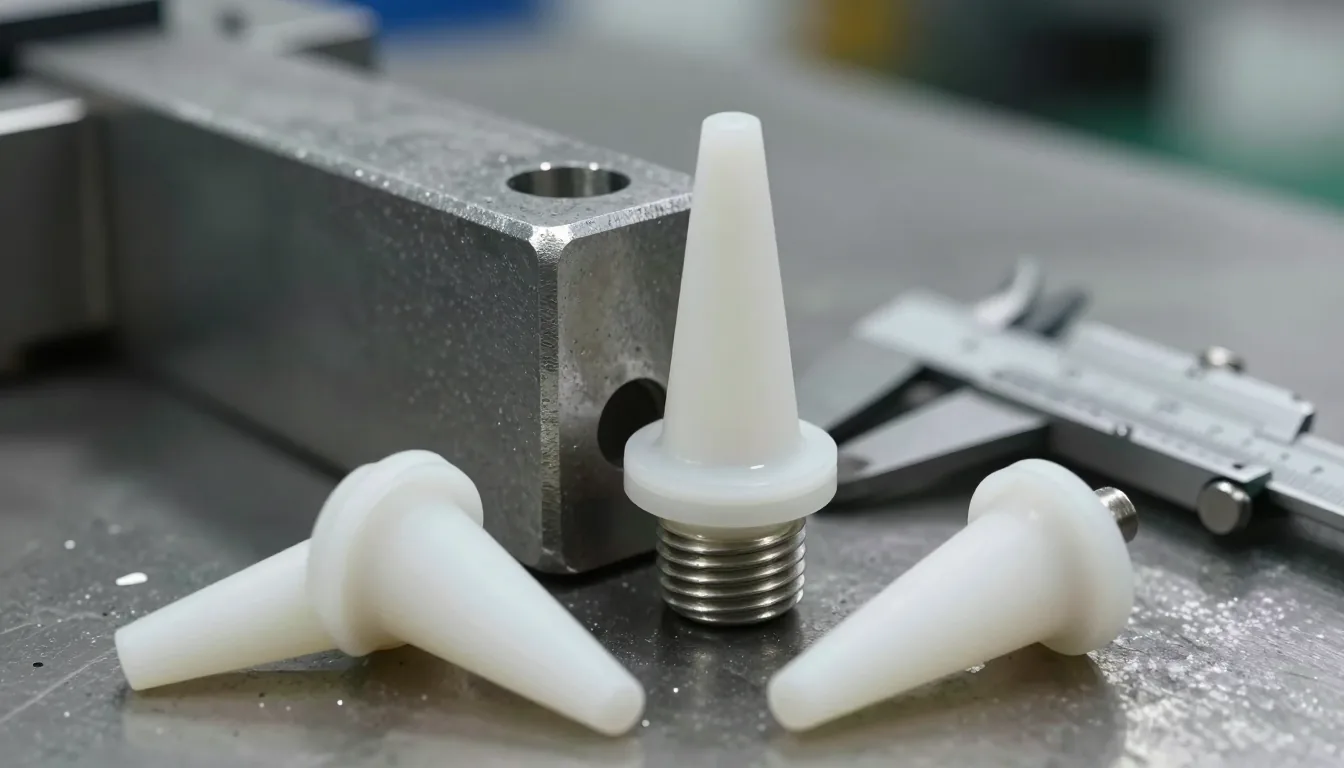
SMT tapered plugs are solid silicone masking components engineered for the precise occlusion of drilled holes and threaded ports during industrial finishing. Their conical geometry allows the plug to self-center and seal against hole walls without the need for threading, enabling rapid manual insertion and removal. The family designation stands for Silicone Masking Tapered, and these parts operate across a temperature range of -90 °C to +315 °C. They are the primary choice for powder coating, e-coat, and liquid paint lines where speed and consistent masking quality are critical for throughput.
Global Terminology and Latin Reading Guide for SMT Tapered Plugs
International manufacturing sites often maintain international documentation for stock control and line-side instructions. Because the same silicone masking plug moves across the supply chain, engineers frequently need to verify that the part referenced by a purchasing department in Munich is identical to the one stocked in Warsaw. The product family name changes across languages, but the core geometry remains the same. The table below standardizes the terminology for the product and its parent category across eight markets, including a practical reading aid for non-native speakers who need to communicate with local suppliers or operators.
| Language | Product: SMT Tapered Plugs | Approx. Reading | Category: Silicone Masking Plugs |
|---|---|---|---|
| English | SMT Tapered Plugs | es-em-ti tey-perd plags | Silicone Masking Plugs |
| German | SMT Konus-Maskierstopfen | ko-nus-maskir-shtopf-en | Silikon-Maskierstopfen |
| Arabic | سدادات SMT المخروطية | sadat es-em-ti el-mikhro-tiyya | سدادات سيليكون للحجب |
| Russian | Конические пробки SMT | ka-ni-chi-ki-ye prob-ki es-em-ti | Силиконовые маскировочные пробки |
| Spanish | Tapones cónicos SMT | ta-po-nes ko-ni-kos es-em-ti | Tapones de silicona para enmascarar |
| Polish | Korki stożkowe SMT | kor-ki stozh-ko-ve es-em-ti | Silikonowe korki maskujące |
| Romanian | Dopuri conice SMT | do-pu-ri ko-ni-tche es-em-ti | Dopuri de mascare din silicon |
| Turkish | SMT Konik Tapalar | s-m-t ko-nik ta-pa-lar | Silikon Tapa-Tıpalar |
Terimler
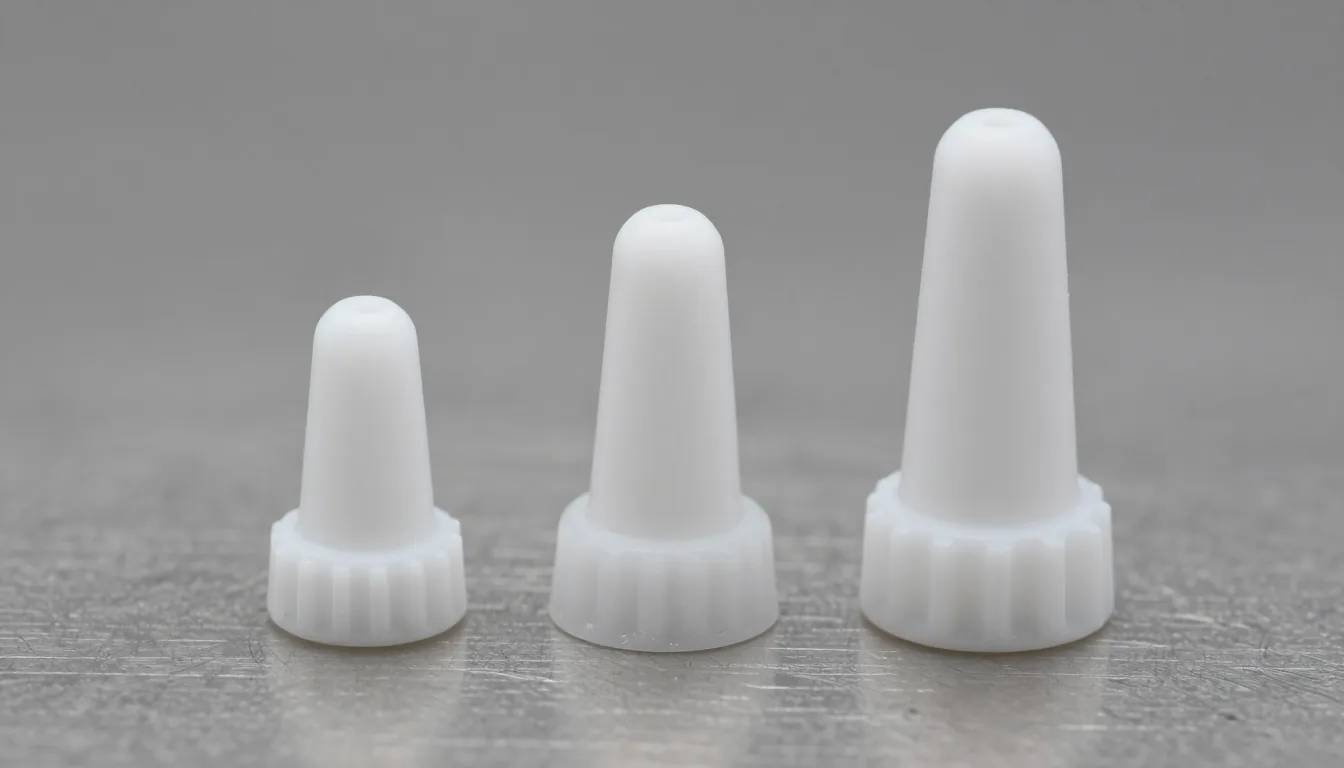
- Tapered body: The conical shaft that provides a friction fit inside a hole.
- Head: The wider flange at the open end that prevents the plug from falling fully through.
- Mandrel: The pointed tip that guides the plug into the hole.
- SMT: The product series identifier for silicone masking tapered plugs.
Integrating SMT Codes and Tapered Geometry into Industrial Processes
Why Choose Conical SMT Plugs Over Flat Plugs?
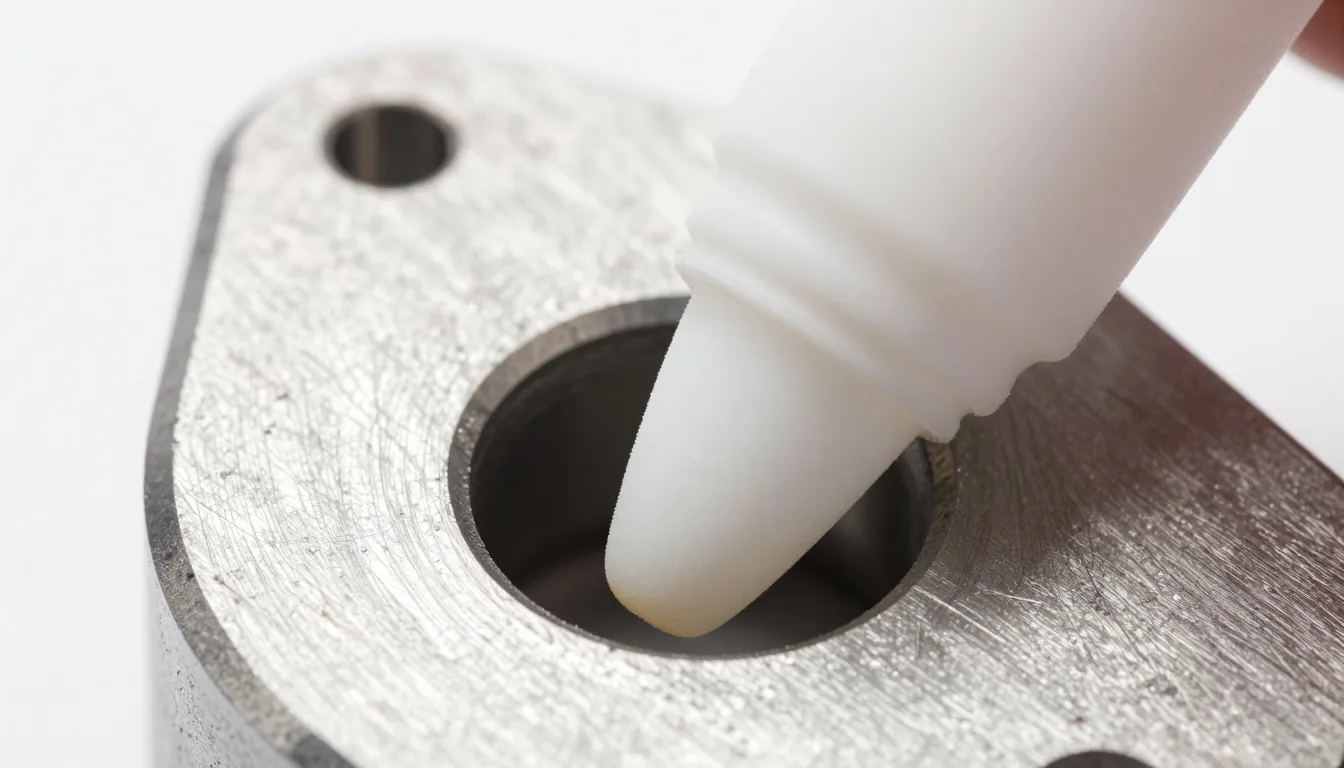
The "SMT" code identifies a solid, unthreaded silicone plug with a conical shaft. A flat, cylindrical plug requires the operator to find a hole of an exact, specific diameter, and any tolerance variation can result in a loose fit. The SMT tapered plug solves this problem. Its body narrows progressively, meaning one plug can adapt to a small range of hole diameters. As the plug enters the hole, the conical wall compresses slightly against the workpiece, creating a mechanical interference fit that blocks paint migration.
Silicone Flexibility and Mechanical Compatibility in SMT Series
These plugs are manufactured from solid silicone, a material that offers elastic recovery. Shore A hardness across the product variants ranges from 50 to 80, which dictates how much force is required to compress the body into a tight opening. A softer plug (50 Shore A) provides more forgiving seating in uneven holes, while a harder plug (80 Shore A) maintains a firmer seal in wider apertures. This elasticity allows the SMT plug to withstand the mechanical vibration of a conveyor line without dislodging, while remaining flexible enough to pop out cleanly once the coating process is complete. The material's continuous operating range of -90 °C to +315 °C covers every standard thermal process, from cryogenic handling to high-temperature curing ovens.
Selecting SMT Sizes Based on Hole Diameter
Selecting the correct SMT size requires comparing the workpiece hole diameter against the plug's taper range, rather than relying on a single fixed dimension. The SMT series covers a broad range of diameters, with sizes increasing in increments to match standard drilling and tapping specs. You can find the complete measurement tables for every part number on the SMT tapered plug product page. The selection logic follows two straightforward steps.
- Measure the hole diameter. Use a pin gauge or caliper to find the minimum and maximum tolerance of the hole you need to mask. The hole should never be smaller than the plug's minimum seating diameter, or the plug will fold.
- Match the plug's seating range. Look for an SMT size whose seating diameter range spans the average of your hole's tolerance band. The plug should be slightly larger than the hole so the silicone compresses upon insertion. If the plug is smaller, paint will seep past the gap.
Calculating Minimum and Maximum Hole Tolerances for Seals
A typical drilled hole has a tolerance band of 0.1-0.3 mm. The SMT size selection should account for the entire band. If a hole measures between 6.0 and 6.2 mm, the selected SMT plug should have a seating range that encompasses 6.2 mm at its widest taper point. Over-sizing the plug by a fraction of a millimeter ensures the silicone compresses and seals, whereas under-sizing leads to paint bleed.
Impact of Tapered Seating Depth on Sealing Quality
The depth at which the SMT plug is seated determines how much the body compresses against the hole wall. Pushing the plug too far into a shallow hole can cause the head to sink below the surface, making it difficult to grab and pull out after painting. Seating the plug only partially ensures the conical body grips the hole without bottoming out. A shallow insertion is generally sufficient for masking through-holes in a flat sheet, while deeper holes may require a plug with a longer taper so the tip does not protrude through the back of the part.
High-Temperature Performance on Powder Coating and E-Coat Lines
Preventing Shape Distortion in 180-220 °C Powder Coating Ovens
Powder coating lines operate at 180-220 °C for 10-20 minutes. At these temperatures, standard elastomers will soften, distort, or degrade. SMT tapered plugs, manufactured from solid silicone, retain their shape and mechanical properties throughout the cure cycle. Because the SMT plug has a solid, unthreaded body, there are no voids or threads to expand or trap volatile compounds, which helps keep the plug's surface free from blisters. Once the part exits the oven and cools, the plug can be pulled out by hand or pliers without leaving residue or fused material behind. This makes SMT plugs the workhorse for high-volume powder coating, where cycle time dictates the number of masking steps the operator can perform.
Chemical Resistance and Surface Smoothness in E-Coat Baths
E-coat systems utilize a water-based emulsion and cure at 180-200 °C. The bath itself contains organic solvents and resins. SMT plugs are designed to resist swelling or degradation when immersed briefly in these baths. The smooth, continuous surface of the molded silicone plug minimizes areas where liquid paint can pool or drip. Because the plug is inserted before the part enters the e-coat tank, it must remain seated despite the turbulence of the flow. The tapered design provides a uniform friction fit that prevents dislodgement, and the tip closes off the hole to prevent internal flash of coating material.
Insertion Direction and Ergonomics in Hand Assembly
The SMT plug is installed with the mandrel (the narrow, pointed tip) entering the hole first. This orientation is critical for two reasons. First, the pointed tip guides the plug into the hole even if the hole is misaligned or the part is vibrating. Second, the body narrows progressively, so the plug requires a steady push to seat fully, which is easier to control than trying to force a blunt, flat plug into a tight bore. The mandrel is a sacrificial guide, meaning it can absorb slight misalignment without causing the body to fold or crease during the initial insertion.
Applications for Pointed and Closed-Tip Masking Plugs
The SMT family includes variants with a sharp, pointed tip for guiding into small, blind holes where the back of the hole has no clearance. In contrast, a closed or blunt tip is preferred for through-holes where the part is small and thin. A pointed tip protruding through a thin bracket can be sharp enough to injure an operator or snag on a conveyor. By selecting the appropriate tip style, manufacturers can maintain a safe line layout while keeping the same masking performance.
Reducing Operator Error in Fast Insert and Removal Cycles
When a single workpiece requires multiple plugs, operators can suffer from fatigue, which leads to incorrect seating depth or wrong sizes. The SMT design minimizes this risk by relying on geometry rather than threading. An operator does not need to rotate or torque the plug; they simply push it into the hole. The correct seating position is felt through the resistance of the silicone compressing. This tactile feedback is faster and less error-prone than the visual confirmation required when using threaded plugs that might be cross-threaded.
Comparing SMT Tapered Plugs and DFP Threaded Plugs
Both SMT and DFP threaded plugs belong to the Silicone Masking Plugs family, but they serve distinct mechanical requirements. The following comparison focuses on how each design fits into a typical masking process.
| Feature | SMT (Tapered) | DFP (Threaded) |
|---|---|---|
| Insertion method | Push (friction fit) | Rotate (screw-in) |
| Assembly speed | High | Moderate |
| Sealing strength | Good | Very high |
| Best application | Quick masking, flat holes | Threaded ports, high pressure |
Speed Advantages of Tapered Structure for Temporary Assembly
In high-volume manufacturing, time is the primary cost driver. An SMT plug takes about one second to insert and remove. A DFP plug requires aligning the threads and rotating it 3-4 times. Over 500 holes per shift, the time saved by using SMT plugs amounts to over fifteen minutes of pure labor. This speed is achieved without sacrificing sealing quality for powder and e-coat processes, where the pressure of the coating liquid or air is relatively low.
Why Threaded Plugs Excel at Fixed-Point Masking
DFP threaded plugs are ideal when the hole itself has internal threads, such as a threaded fuel port. In this scenario, the plug's threads engage with the workpiece, providing a mechanical lock that the plug cannot accidentally vibrate out of. Additionally, for parts that will be machined or drilled after the paint cure, a DFP plug provides a hard, defined inner diameter that a drill bit can use as a guide, whereas an SMT plug could be pushed out by the drilling pressure.
SMT vs. SPP Stepped Plugs: Behavior in Deep Holes
When you are masking a blind hole deeper than three times the diameter, the behavior of the SMT and SPP stepped plug differs significantly. The SMT taper is a continuous cone, meaning it compresses progressively along its length. In a deep hole, an SMT plug can reach a point where the friction forces at the back of the hole lock it tightly, or it can create an air pocket that prevents the plug from seating fully.
Seating Stability of Stepped Structures in Deep Slots
SPP plugs feature a stepped shaft with distinct cylindrical sections and grooves. The grooves act as expansion pockets, allowing the plug to seat at a defined depth regardless of the hole depth. The steps provide a positive mechanical stop, preventing the plug from being over-seated or pulled out. This makes SPP the better choice for deep holes where you need repeatable, identical sealing depth across thousands of parts, such as the long bores found in hydraulic cylinders.
Fast Masking Benefits of SMT Plugs in Shallow Holes
For blind holes that are shallower than three times the diameter, SMT is the optimal choice. A long SPP plug cannot be inserted fully, while an SMT plug seats quickly with minimal force. The tapered body of the SMT plug ensures the mandrel can reach the bottom of the hole, sealing off the tip of the blind hole to prevent internal coating, while the wide seating area provides a secure hold. This keeps the line running fast and reduces plug inventory, as a single SMT size covers a wider tolerance range than the fixed diameters of SPP steps.
Wear Resistance of Silicone Plugs in Liquid Paint and Treatment
Liquid paint lines operate at 80-150 °C during the drying and baking phases. The SMT plug's primary concern in these environments is not thermal softening but surface adhesion. If paint seeps into microscopic defects in the plug's surface, the plug can become bonded to the workpiece. SMT plugs are molded from high-purity silicone, which has an inherently low surface energy. This makes it difficult for uncured liquid paint to form a strong chemical bond with the plug.
Surface Tack Testing in 80-150 °C Drying Ovens
A common defect in liquid painting is the "tacky" surface, where the paint remains sticky even after baking. If an SMT plug is inserted into a wet hole before the initial flash-off, it must resist being pulled into the coating. When the plug is pulled out, it should leave a clean hole with no paint stringing or bridging. This outcome is achieved by the tapered body: the plug seals the hole immediately upon insertion, preventing the liquid paint from wicking into the gap between the plug and the wall.
Maintaining Material Integrity During Solvent-Based Cleaning
Before painting, parts are often cleaned with solvent vapors or alkaline washes. Silicone is chemically inert to most industrial solvents and caustics. However, mechanical abrasion from a cleaning line conveyor or wire brush can nick the surface. An SMT plug with deep cuts may trap solvent inside the crevice, which can boil off during the baking cycle, creating a tiny bubble in the paint finish. To prevent this, replace plugs that show visible nicks or gouges. The Silicone Handles category provides tools that help remove SMT plugs without twisting or tearing the silicone body.
Looking for Professional Silicone Masking Solutions?
As YÜZEYTEK, we provide professional silicone masking and industrial coating solutions worldwide. Contact us immediately for your needs.
Related Posts
How to Choose the Right Silicone Plug Size: Thread, Diameter and Length Guide
Test Plug Extrusion Failure: Causes and Fixes