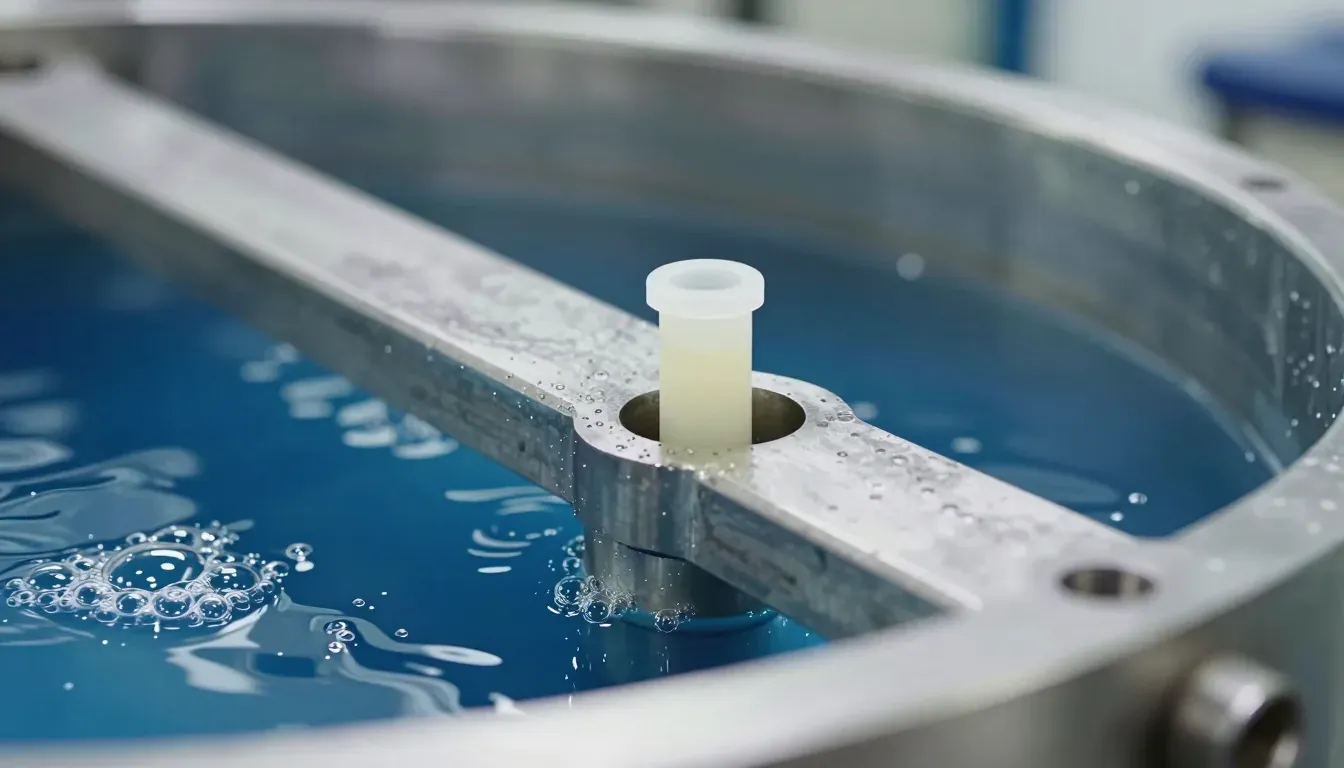

DFP Threaded Plugs: Thread Protection for E-Coat, Paint and Sizing Guide
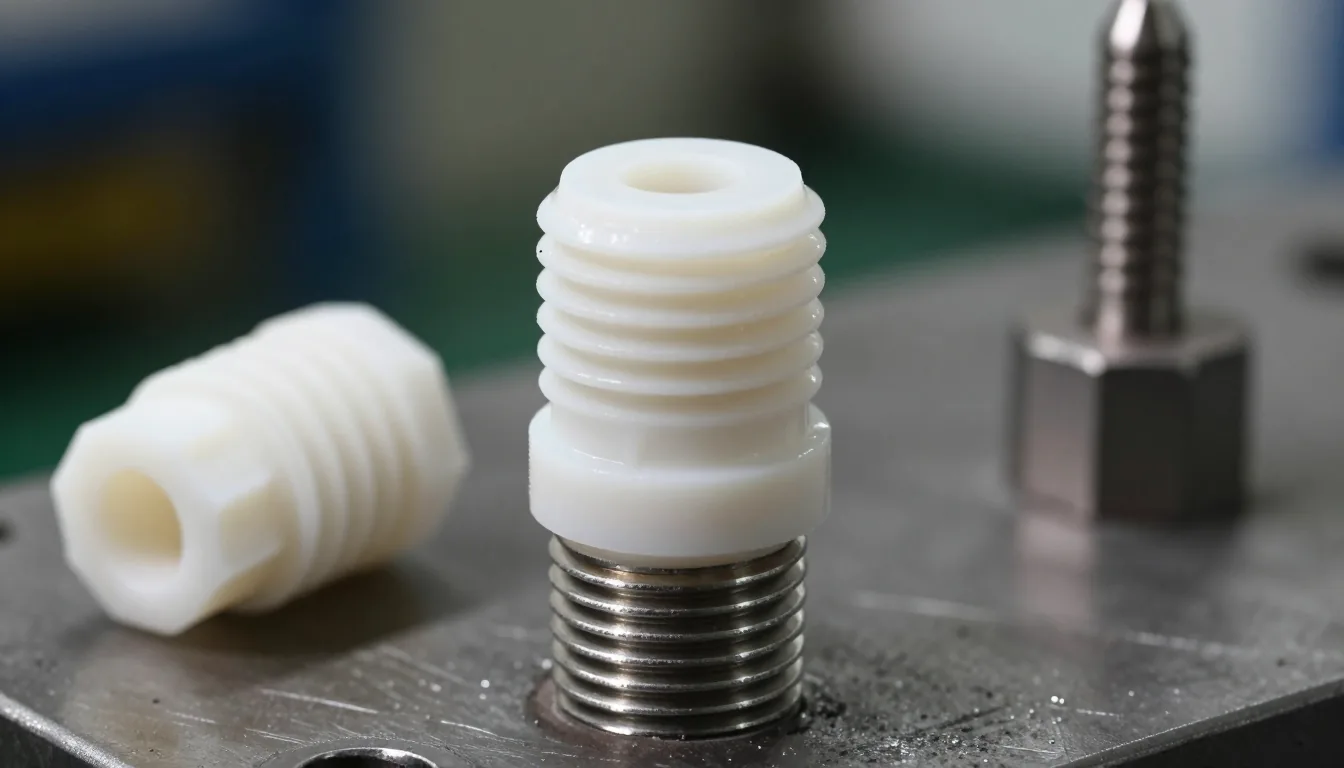
DFP Threaded Plug Terminology and Pronunciation Guide
DFP Threaded Plugs are silicone masking plugs with external threads that seat directly into an existing thread pitch to protect internal threads during coating. Their names vary across markets, so this guide lists several languages with Latin-based pronunciation aids to prevent procurement errors.
Clear naming matters in global supply chains. A mismatched term can slow sourcing and introduce wrong parts into a coating line. Using one standard label keeps requests, drawings, and purchase orders aligned across borders.
Technical Nomenclature Across European Markets
Within Europe, terms reflect local standards and shop-floor habits. English uses "DFP Threaded Plugs" or "threaded masking plug," while German favors "DFP Gewinde-Maskierstopfen," pairing Gewinde (thread) with Maskierstopfen (masking stopper). Spanish buyers say "Tapones roscados DFP," emphasizing rosca (thread).
Polish and Romanian labels stay close to English logic: "Korki gwintowane DFP" and "Dopuri filetate DFP." Russian "DFP Резьбовые пробки" pairs резьбовые (threaded) with пробки (plugs). Arabic renders the brand and function as "سدادات DFP الملولبة." The table below shows each name plus a Latin-style guide to the spoken form.
Global Supply Chain Standard Naming Conventions
For multi-country teams, anchor requests to a category and a product code rather than a local word alone. Category labels such as Silicone Masking Plugs (Silikon-Maskierstopfen / Силиконовые маскировочные пробки / Tapones de silicona para enmascarar) group items that share silicone properties, while the product label pins the threaded variant.
| Language | Written form | Approx. Latin pronunciation |
|---|---|---|
| English | DFP Threaded Plugs | dee-ef-pee THRED-id plugz |
| German | DFP Gewinde-Maskierstopfen | dee-ef-pee ge-VIN-deh-MAS-keer-shtop-fen |
| Arabic | سدادات DFP الملولبة | sadda-dat dee-ef-pee al-mulaw-la-ba |
| Russian | DFP Резьбовые пробки | dee-ef-pee rez-bo-VA-ye PROBK-i |
| Spanish | Tapones roscados DFP | ta-PON-yes ros-KA-dos dee-ef-pee |
| Polish | Korki gwintowane DFP | KOR-ki gvin-to-VA-neh dee-ef-pee |
| Romanian | Dopuri filetate DFP | DO-pu-ri fe-li-TEA-te dee-ef-pee |
| Turkish | DFP Dişli Tapalar | dee-ef-pee DEESH-li ta-pa-LAR |
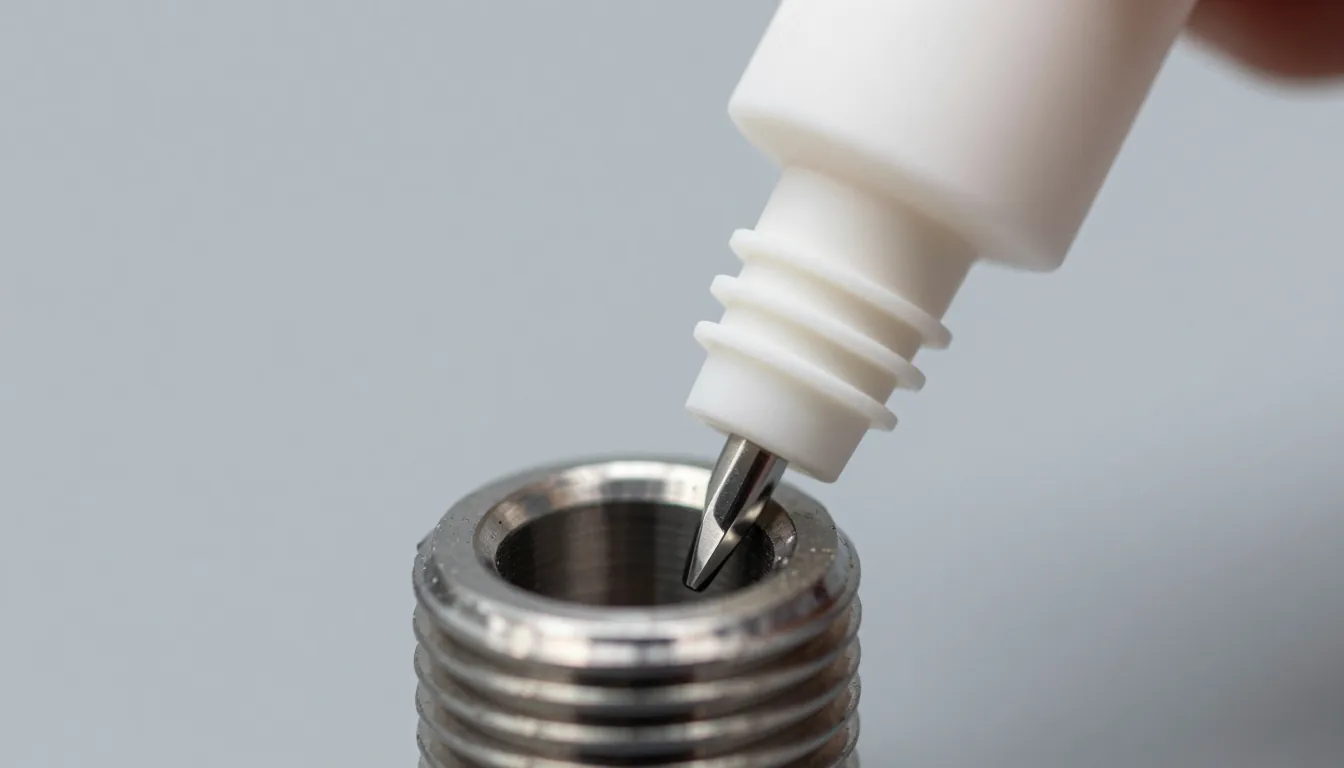
DFP Threaded Body Fit and Thread Pitch Mechanics
The DFP works by matching its external thread to the internal thread of the part, so the plug advances along the same helix the fastener would use. Sealing comes from controlled elastic interference: the silicone flank touches the metal flank with mild pressure, closing the path that coating would otherwise follow.
Silicone Elastomer Interaction with Thread Profiles
Silicone is soft enough to conform yet elastic enough to spring back. As you turn the DFP, its thread ridges enter the grooves of the steel thread. The contact line runs along each flank rather than only at the crest or root, distributing load evenly. That continuous flank contact is what resists paint migration during the process.
Because the fit is thread-guided, the plug self-aligns without wobbling. A wrong-pitch part will not advance smoothly; it will bind or cross-thread on touch, which is a useful first check before you commit to full seating.
Managing Over-Compression and Under-Seating Risks
Both extremes cause defects. Over-compression squeezes the elastomer past its comfort zone, raising extraction force and risking torn lips or distorted flanks. The plug may also grip the root too tightly, so removal leaves the thread surface marked.
Under-seating leaves gaps between the plug flank and the part flank. Coating then creeps along those gaps and bridges the opening, leaving a painted thread you must rework. Seat until light, steady resistance appears at the depth you planned. Do not force rotation beyond the point where the plug still turns freely; resistance, not torque, marks correct seating. For dimensional checks, see the product page table.
Protecting Thread Lines During Painting and Coating
Coating processes move liquid or powder onto every exposed surface, and an open internal thread is a small reservoir that traps it. If the thread is not masked, paint cures inside the groove, the fastener no longer fits cleanly, and the joint loses clamp control. Masking the thread preserves both fit and function.
Contamination Risks in Powder-Coat and E-Coat Environments
Two mainstream finishes threaten threads in different ways:
- Powder coat. Charged particles cling to exposed metal and are cured at 180-220 C. Particles can settle deep in the thread root and fuse, so the thread becomes rough or partially blocked after bake.
- E-coat. The part is dipped in a water-based bath and baked at 180-200 C. Liquid enters the thread by capillary action, then cures into a continuous film that seals the bore shut.
In both cases, the cured residue is not surface dirt you can wipe away; it is bonded to the flanks. Rework means tapping out the hole, which adds time, generates swarf, and can damage the original thread. Masking with a threaded silicone plug stops the contamination at its source, so the thread stays as machined. The result is a bare, clean thread right out of the oven, ready for assembly.
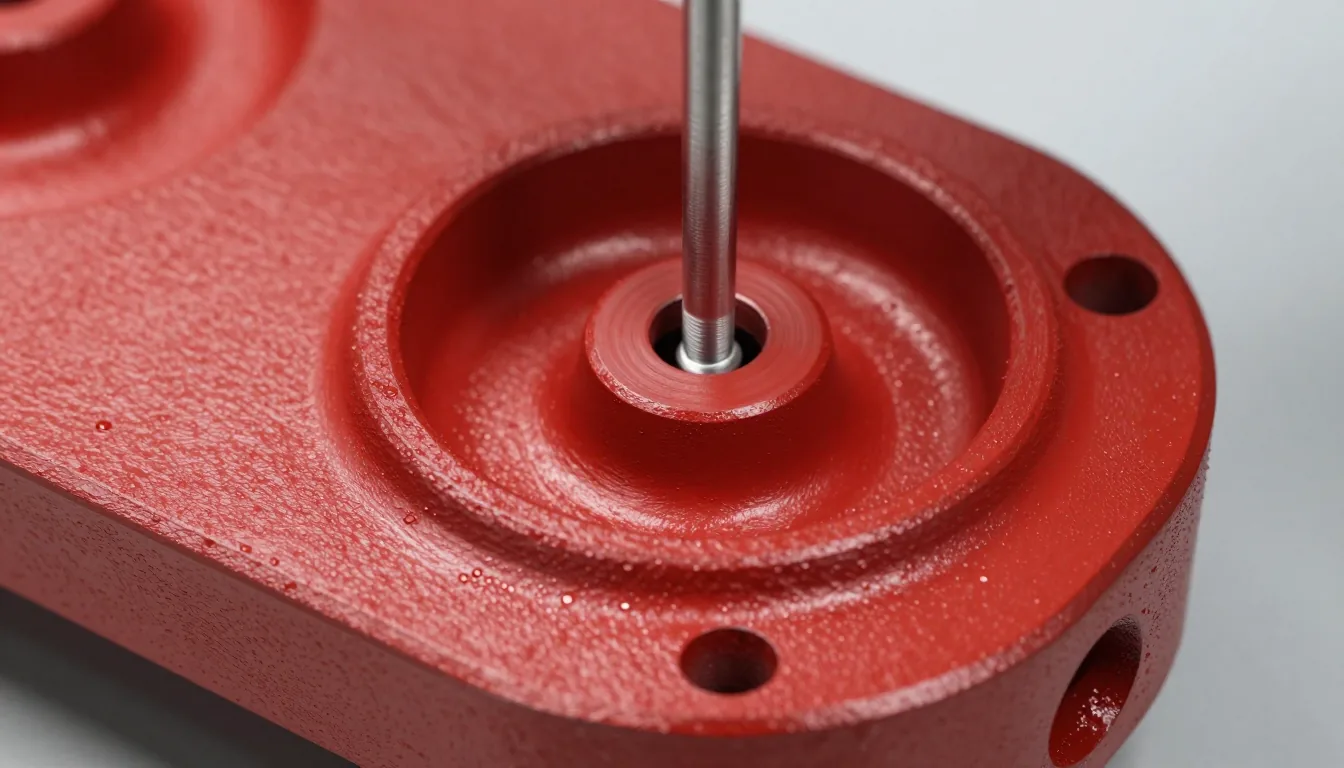
Thermal Performance: -90°C to +315°C Analysis
The DFP is silicone and operates reliably between -90 C and +315 C. That window covers both freezing conditions and the bake stages of powder coat (180-220 C) and e-coat (180-200 C), so a single part handles the whole cycle without softening or cracking.
Shore A Hardness and Stability at High Temperatures
Shore A hardness for DFP variants spans 50 to 80 depending on the specific part. A softer 50A grade conforms more readily into fine thread pitches and absorbs slight pitch variation, while a harder 70 to 80A grade resists deformation under repeated use. Either way, the elastomer recovers its shape after cooling, which is why the same plug returns to its original profile after the oven.
Form stability is what matters during cure. If a plug softened excessively, it would slump into the bore and leak coating. Within the verified range, the silicone holds its thread geometry so the sealing line stays intact through bake and cool. This is a material property, not a guess: choose the Shore A band that suits your pitch from the product page rather than assuming one hardness fits all thread sizes.
Selecting Correct Diameter, Pitch, and Hole Depth
Size selection follows three inputs in order: major diameter, thread pitch, and hole depth. Match the diameter first, then the pitch, then confirm the depth leaves enough thread contact for a seal. The DFP only seals if it advances through real thread length.
Interpreting Technical Specifications on Product Pages
Open the table on the product page and work across the row for your target thread:
- Major diameter. Confirm the nominal thread size of your part so the plug thread can enter the groove.
- Pitch. Match the number of threads per unit length; a pitch mismatch will not advance.
- Thread depth. Verify the available thread length meets or exceeds the plug's engaged length so the seal sits below the coating line.
Read values exactly as printed; do not interpolate between rows. When your thread falls between two rows, select the part listed for your actual nominal size.
Operational Losses from Incorrect Size Selection
A diameter that is too small leaves a ring gap and lets coating through. A diameter that is too large binds and cannot seat to depth. A pitch error stops the plug short, and a too-short thread depth leaves the seal exposed above the mask line. Each error produces the same downstream cost: rework, scrapped parts, or a jammed fastener at assembly.
Terms: product, DFP Threaded Plugs (DFP Gewinde-Maskierstopfen / DFP Резьбовые пробки / Tapones roscados DFP); category, Silicone Masking Plugs (Silikon-Maskierstopfen / Силиконовые маскировочные пробки / Tapones de silicona para enmascarar).
DFP Threaded Plug vs. SMT Conical Plug Comparison
The DFP seals by thread engagement: its external thread rides the part's internal thread, so fit is keyed to size and pitch. The SMT conical plug seals by friction in a smooth bore, so it works on plain holes rather than threaded ones. The difference changes how you select and apply each part.
Selection Criteria for Industrial Application Areas
Use the DFP when the opening is a true internal thread that must stay bare, such as a drilled and tapped mounting boss. Use the SMT conical plug when the opening is a smooth hole, a chamfered port, or a through-bore without a usable thread. A conical plug cannot follow a thread helix, and a threaded plug cannot seat in a smooth bore.
Analyzing Economic and Operational Efficiency
The DFP reduces rework because it removes the thread-protection failure mode entirely. The SMT reduces setup time on plain holes and tolerates small bore variation. Both are silicone parts suited to the same temperature window, so the cost question is about defect prevention, not material price. For flanged openings, the SCT flanged conical plug covers the face around a hole. Compare the two thread-related families below.
| Attribute | DFP Threaded Plug | SMT Conical Plug |
|---|---|---|
| Sealing method | Thread engagement | Friction in smooth bore |
| Required opening | Internal thread | Plain or chamfered hole |
| Size match | Diameter + pitch + depth | Bore diameter |
| Typical use | Thread protection | Hole masking |
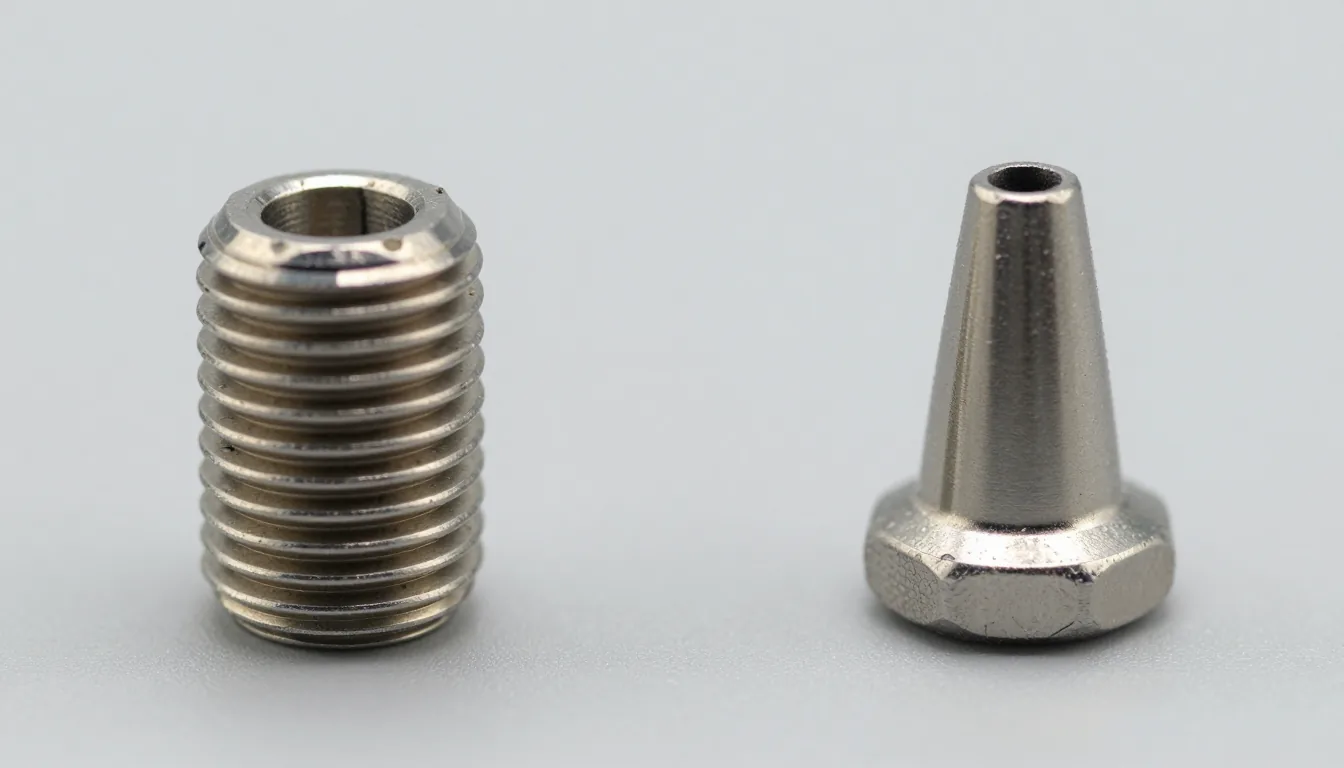
Proper Placement and Initial Leak-Check Procedures
Place the DFP by turning it into the thread with clean, dry fingers until light, steady resistance appears at the planned depth. A correct seat produces a smooth, even advance; if rotation jumps or binds, the plug has crossed the thread and must be reset.
Essential Precautions During Installation
- Start the plug straight; a tilted start cross-threads the flank.
- Wipe the bore of oil, chips, or moisture before seating so the seal line contacts metal.
- Seat to depth with finger pressure only; do not wrench or hammer the plug.
- After seating, glance at the opening: the plug crest should sit level with or just below the part face, never proud.
For the first leak-check, do not rely on a pressure gauge here; instead confirm visual seating and uniform resistance. A properly seated DFP shows no gap ring at the opening and does not rock when touched. If you need retention features or handle-free variants, browse the silicone handle range for accessories that ease placement in deep bores.
Removal Procedures and Reusability Lifespan
Remove the DFP by turning it counter-clockwise along the same helix it entered, using steady axial-aligned rotation rather than prying. Smooth rotation back out confirms the thread stayed clean during the bake.
Safe Removal Methods to Prevent Thread Wear
Prying with a screwdriver across the bore damages the plug lips and risks marring the thread flank. Instead:
- Align a tool or finger grip with the plug axis and reverse the seating turn.
- If the plug is tight, ease it with small back-and-forth rotations until it frees, then continue out.
- Inspect the plug crest for cured coating; a plug coated on the outside is spent and should be retired.
Reusability depends on the condition of the elastomer, not a fixed number of cycles. As long as the thread ridges remain intact, the lip is not torn, and the part still seals with light resistance, the plug can be reused. Retire it when you see hard coating baked onto the flanks, a flattened crest, or a tear, because those defects reopen the leak path. Track plugs per cell and replace them before they cause a coating escape rather than after.
FAQs: Tolerances and Application Limits
The DFP relies on thread geometry, not a pressure rating, to mask coating. It is designed to close the coating path in open or low-pressure production stages. Do not specify a pressure value for it, since sealing here is governed by thread engagement and temperature range rather than a pressure figure.
Pressure Leak-Proofing Expectations for Plugs
For masking work the plug must stop liquid or powder from entering the thread. It does this through flank contact within the verified -90 C to +315 C window. If your process involves pressure testing the part while masked, treat the DFP as a coating mask, not a pressure plug, and verify by trial that it meets your specific test before relying on it in production.
Integration with Tapping and Machining Operations
The DFP protects an already-tapped thread during finishing. It does not create a thread and is not a tapping tool. Tapping, re-tapping, and thread repair fall outside this product's scope; if a thread is damaged, resolve that upstream so the masked thread is sound before coating.
When in doubt about a size, return to the table on the product page instead of improvising a tolerance. A measured match to diameter, pitch, and depth prevents both the leak and the over-compression problems described earlier.
Industrial Recommendations and Final Thoughts
DFP Threaded Plugs keep internal threads bare through powder coat and e-coat by seating directly into the thread pitch. Choose by diameter, pitch, and depth from the verified table, seat to light resistance, and remove along the same helix. The result is a clean thread that assembles without rework.
Enhancing Productivity with the Right DFP Plugs
Three habits raise yield on a coating line. First, standardize the part name across languages using the table in this guide so procurement pulls the correct threaded variant every time. Second, seat by resistance at depth rather than force, protecting both the plug and the flank. Third, inspect plugs on a set interval and retire any that carry baked coating or show a worn crest.
Pair the right family with the right opening: DFP for true threads, the silicone masking plugs category for all hole types, and conical or flanged designs for smooth bores. By treating thread protection as a controlled step inside the paint and e-coat window of -90 C to +315 C, you remove the most common cause of threaded-part rejects and keep assembly lines moving at design rate.
Looking for Professional Silicone Masking Solutions?
As YÜZEYTEK, we provide professional silicone masking and industrial coating solutions worldwide. Contact us immediately for your needs.
Related Posts
High-Temperature Masking: What 260 °C and 315 °C Resistance Really Means

Why 4-Hour Post-Cure? Molecular Completion of Silicone Compound