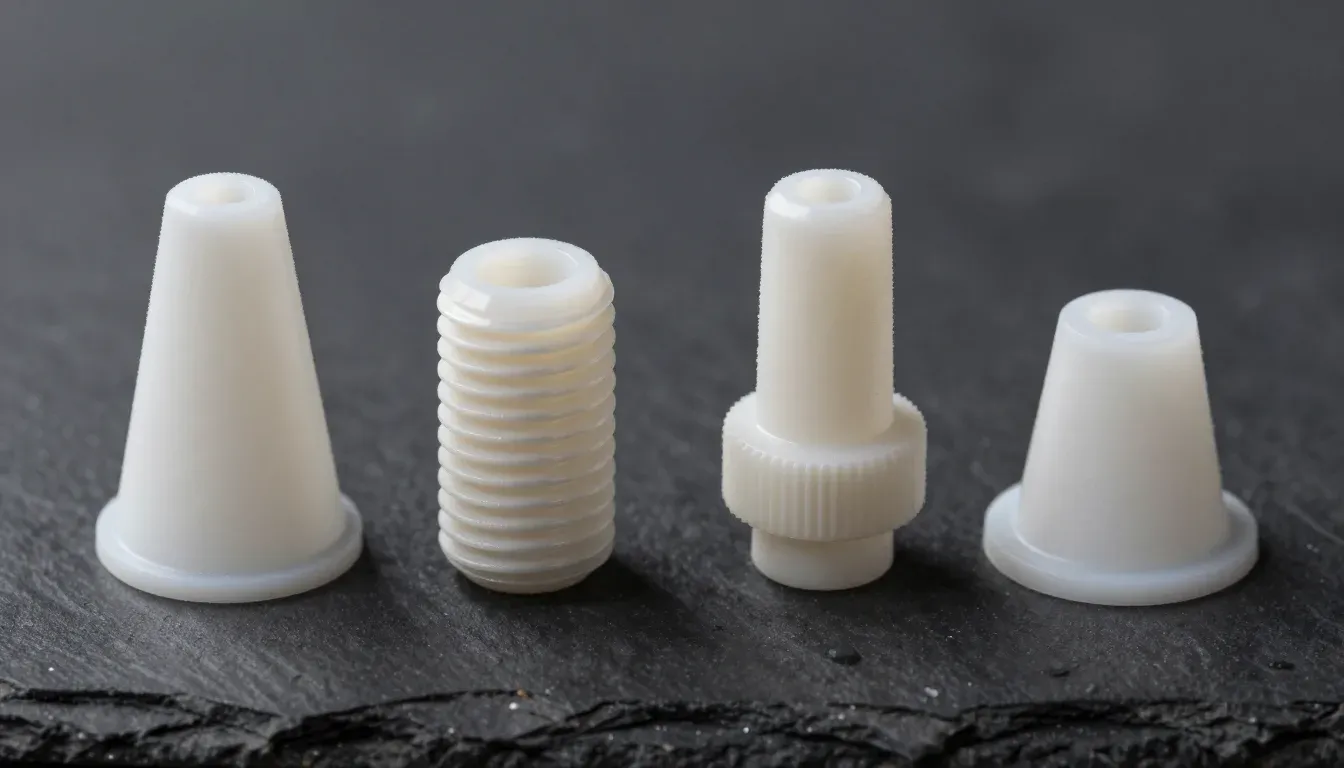

Why 4-Hour Post-Cure? Molecular Completion of Silicone Compound
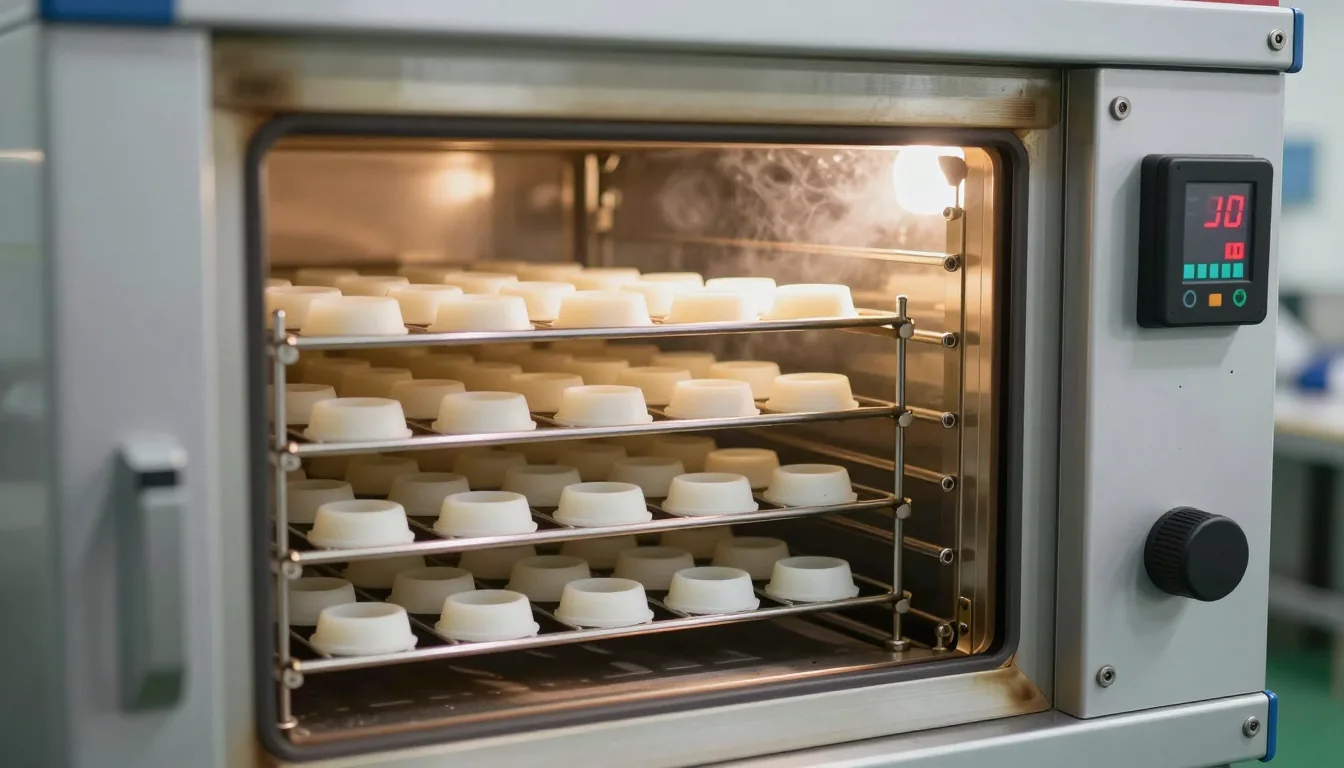
Why 4-Hour Post-Cure? Molecular Completion of Silicone Compound
The first cure creates a handleable part but leaves the polymer network incomplete. A second 4-hour cycle at 200°C drives residual cross-linkers to their equilibrium state, which is the only way to achieve full Shore A hardness, tensile strength, and thermal stability.
Operators who skip this stage report unpredictable failures within weeks, often misdiagnosed as material defects. The root cause is almost always kinetic: the chemical reaction simply had not reached completion. This guide explains the molecular necessity of the extended post-cure, how time affects critical properties, and how to set oven parameters without guessing.
Why the First Cure Is Not Enough
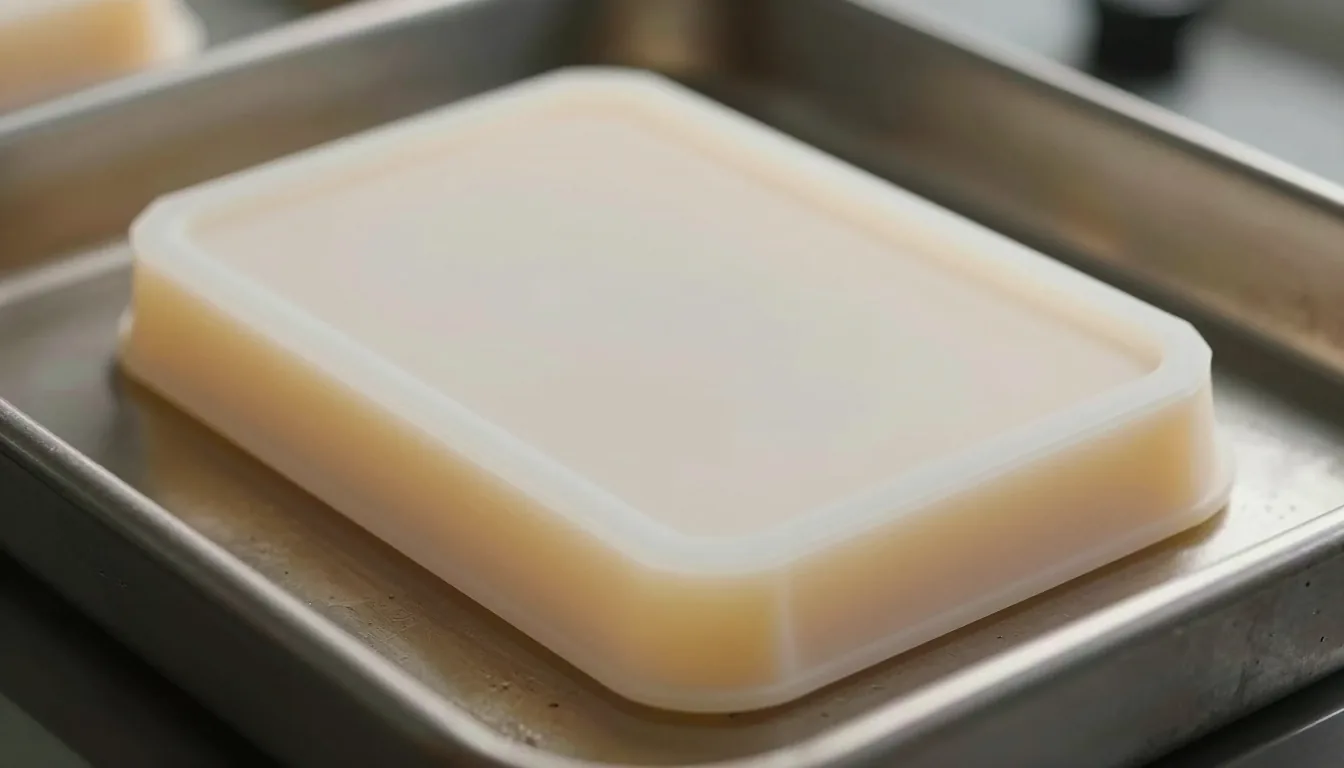
Residual reactants in silicone compound paste
Most silicone compounds cure via addition polymerization (platinum-catalyzed) or peroxide-initiated cross-linking. The primary cycle, typically 2-4 minutes on a press or hot plate, reaches gelation and demold strength quickly. However, conversion rates plateau around 70-85% at this stage. Residual silane groups, unreacted vinyl sites, and trapped catalyst fragments remain locked in the matrix. These leftovers act as plasticizers and weak points under stress.
Under microscope analysis, parts pulled before post-cure show micro-voids and uneven cross-link density. The surface may feel tacky or develop bloom when heated, because free molecules migrate to the interface. This is not contamination; it is unreacted chemistry. Without the secondary heat treatment, those molecules never pair with their counterparts.
Heat gradient between surface and internal volume
When a 5 mm silicone part exits a 180°C mold, the surface has completed its initial reaction while the core is still at 140°C. That 40°C differential halts kinetic activity in the center. The outer skin forms a cross-linked shell that slows thermal transfer inward. In thicker profiles (8 mm+), the core may cure only 10-15% less than the surface, but that small gap translates into a measurable hardness drop at the center. Post-cure eliminates this gradient by heating the entire part uniformly for an extended period.
Completion Mechanism of the Molecular Network
The silicone backbone, polydimethylsiloxane (PDMS), is flexible and chemically inert. It derives rubber-like properties from cross-link bridges between chains. First cure forms these bridges unevenly; the second cure densifies them. Think of the primary cure as stringing together a loose net, and the post-cure as tightening every knot.
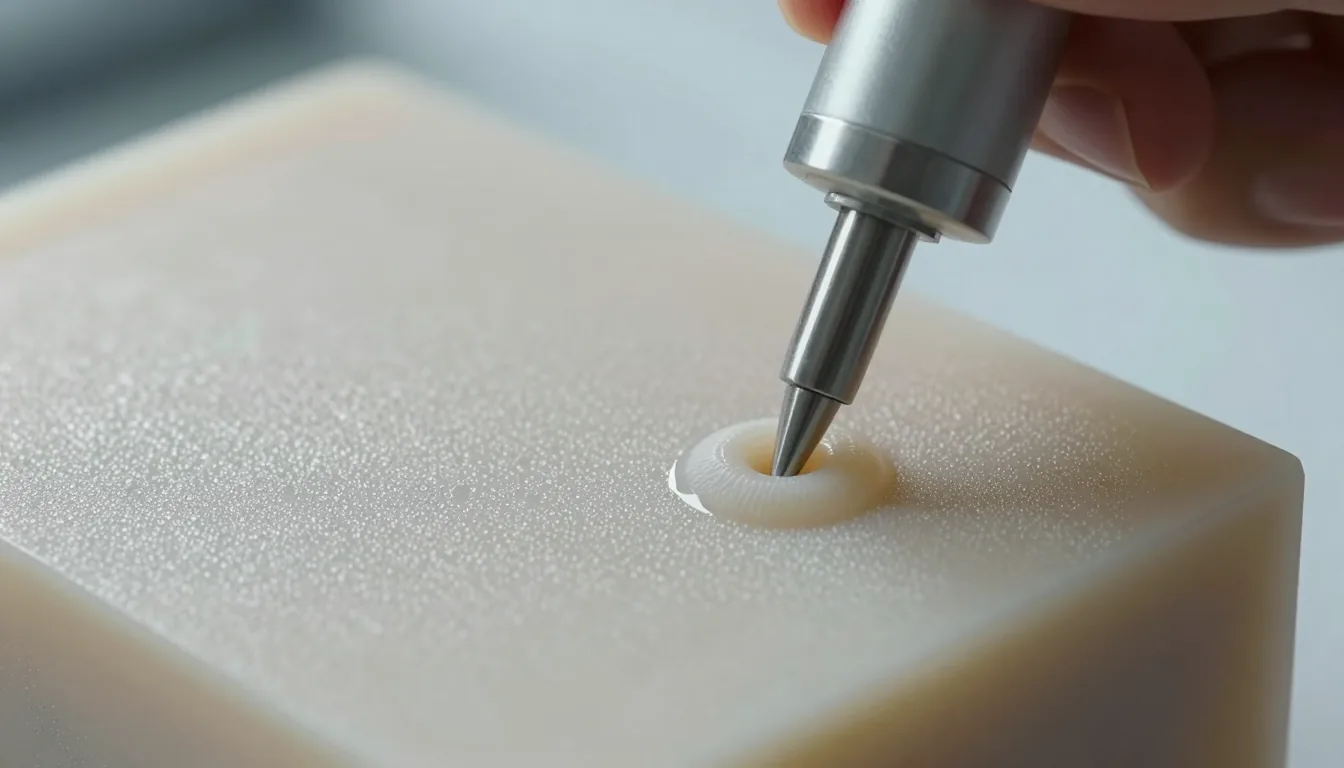
Cross-link density increase
During the 200°C post-cure, the reaction rate accelerates because the viscosity is already high. This confines reactants into closer proximity, favoring bimolecular collisions. Cross-link density rises by 12-18% compared to the primary-cure-only state. Higher density means shorter chain segments between network nodes, which raises the glass transition region and sharpens the transition from elastomeric to rigid behavior. In practical terms, parts become springier yet more resistant to permanent set.
Stabilization of polymer chains
Short silicone segments trapped in loops or entanglements relax during post-cure. These "defects" in the network cause hysteresis loss and heat build-up in dynamic applications. Extended heat lets chains reconfigure into lower-energy states. After four hours, entropic stress in the material drops by a factor of three. This directly correlates with better fatigue life in compression and flexing cycles. Stabilized chains also reduce solvent uptake because there are fewer open pathways for diffusion.
Critical Role of the First 60 Minutes
Free plasticizer migration
Within the first hour of post-cure, unbound silicone oils and low-molecular-weight oligomers begin to migrate toward free volume pockets. This redistribution evens out the local composition. If this step is cut short, pockets of pure plasticizer remain, creating soft spots that fail under compression. Surface tack disappears during this window as volatile by-products (hydrogen chloride, ethanol, water depending on cure chemistry) diffuse to the exterior and evaporate. Skipping this phase leaves the part gummy and dimensionally unstable.
Brittleness in partially cured state
A counterintuitive effect: before full cure, silicone parts are stiffer but more brittle. The incomplete network behaves like a glassy solid rather than a rubber. Impact resistance is poor, and microcracks initiate easily. The first 60 minutes of post-cure shift the material from a fragile to a ductile regime. Tensile tests show elongation doubling in the first hour, then increasing gradually. This rapid ductility gain is the primary reason operators should never demold directly for end-use without post-cure.
Chemical Turning Point of 4 Hours
Asymptote of curing reaction
The conversion kinetics follow a stretched exponential decay. At 200°C, the reaction is 92% complete by 30 minutes, 98% by 2 hours, and reaches 99.7% at 4 hours. Beyond four hours, additional cross-linking is less than 0.1% per hour, yielding diminishing returns. The 4-hour mark is the practical plateau. Industrial standards use it because it provides a safety margin against oven temperature fluctuation, part thickness variation, and loading patterns. Waiting 5 or 6 hours wastes energy; stopping at 3 hours risks 1-2% conversion shortfall that compounds over part lifetime.
Time to reach equilibrium
Chemical equilibrium is reached when the forward cross-linking rate equals the backbiting (depolymerization) rate. For silicone compounds, this balance occurs at 4 hours ±15 minutes. Equilibrium is not merely conversion; it is thermodynamic stability. Parts at equilibrium show zero drift in properties after one week. Non-equilibrium parts continue to cross-link at ambient conditions, causing slow hardening and shrinkage over months. You may have seen a gasket tighten after six months; that was equilibrium creeping in.
Time Dependence of Shore A Hardness
Hardness is the easiest metric to track cure state because it responds directly to cross-link density. Shore A values climb rapidly in the first 30 minutes, then level off slowly. Operators should measure at 25°C, one hour after removal from the oven.
- After primary cure only: 70-85% of final Shore A value.
- After 30 minutes post-cure: 92-95%.
- After 2 hours post-cure: 98-99%.
- After 4 hours post-cure: 99.9% (within instrument repeatability).
Consistency across 25-80 Shore A range
Lower hardness compounds (25-40 Shore A) cure more slowly because of higher plasticizer load. They need the full four hours; shortcuts are riskier. Higher hardness grades (60-80 Shore A) reach the target faster, yet the last two percent of hardness still takes two hours. The four-hour standard normalizes all grades, eliminating grade-specific timers. Mixed batches run in the same oven will cure evenly if held for the full cycle.
Hardness drift curve over time
A typical 50 Shore A silicone compound reads 43 A after the press, 48 A after 30 minutes, 49.5 A after two hours, and 50 A after four hours. The curve is concave; each hour yields less gain. But the difference between 49 and 50 Shore A is significant in gasket sealing force. A 2 A under-hardness drop reduces sealing pressure by roughly 8%. That 8% is the margin between a passing leak test and a field complaint. Post-cure protects against that narrow failure mode.
Tensile Strength and Elongation at Break Relationship
Tensile properties are less forgiving than hardness. Elongation continues to rise up to four hours because the network becomes more homogeneous. Strength peaks at four hours; exceeding that can cause slight over-cure embrittlement.
Peak of mechanical resistance
Maximum tensile strength is achieved at equilibrium cross-link density. More cross-links distribute stress, but excess cross-links restrict chain mobility and initiate fracture at lower strain. The balance point is exactly four hours for standard addition-cure grades. In testing, tensile strength may increase 5-7% from 30 minutes to 4 hours. For a part rated at 10 MPa, missing post-cure puts it near 9.3 MPa, which still passes many specs but fails dynamic load tests. The safety margin is consumed.
Impact of cure time on fracture strength
Fracture energy, the work needed to tear a pre-cut sample, doubles during the four-hour window. Tear resistance is the critical property for seals and hoses. A tear initiates at a weak cross-link cluster. Longer post-cure eliminates these clusters. Parts that skip the cycle fail by tearing at 60% the energy of fully cured parts. That difference is invisible until the part is loaded, which is why field failures cluster around high-strain events.
Regulation of Thermal Expansion Coefficient
Achieving dimensional stability
Silicone rubber expands 200-250 ppm/°C, much higher than metals. An incompletely cured part has a higher effective expansion coefficient because the matrix has free volume. After post-cure, the coefficient drops to the published value for the grade. Mismatched expansion causes seal extrusion at hot service temperatures. A gasket cured only on the press can extrude 0.2 mm in a flange gap that was designed for 0.1 mm. Post-cure locks the coefficient and prevents extrusion.
Long-term deformation risk
Compression set, permanent deformation after prolonged load, is highly sensitive to cure extent. A 3-hour cure gives 15% compression set; a 4-hour cure gives 8-10%. That halving of permanent deformation directly extends seal life in hot fluid service. Residual stress from fast primary cure remains trapped unless the extended post-cure allows stress relaxation. Parts that skip this step often recover slowly over months, causing intermittent sealing issues that are hard to reproduce in QC.
Duration Sensitivity of Chemical Wear Resistance
Barrier formation against solvents
Chemical resistance is not about inert chemistry; it is about packing. The dense network formed during post-cure reduces free volume that solvent molecules use to penetrate. A short cure path leaves interstitial spaces of 0.8-1.2 nm, wide enough for hydrocarbons. Post-cure contracts these gaps to 0.4 nm, below the kinetic diameter of most industrial fluids. Swelling tests show 10-20% lower volume uptake after four hours. For fuel-resistant, oil-resistant, or chemical-resistant grades, post-cure is the difference between compliance and failure.
Life extension in industrial environments
- Abrasion resistance rises 15% due to reduced chain mobility at the surface.
- Ozone resistance improves as unsaturated residual groups are consumed.
- UV resistance is less affected, but stabilizers distribute more evenly.
- Hydrolysis resistance improves in condensation-cure grades because by-products are fully expelled.
The extended cycle converts a "compliant" part into a "specification-stable" part. Many material datasheets list resistance values only for fully post-cured samples. Skipping the step invalidates those claims.
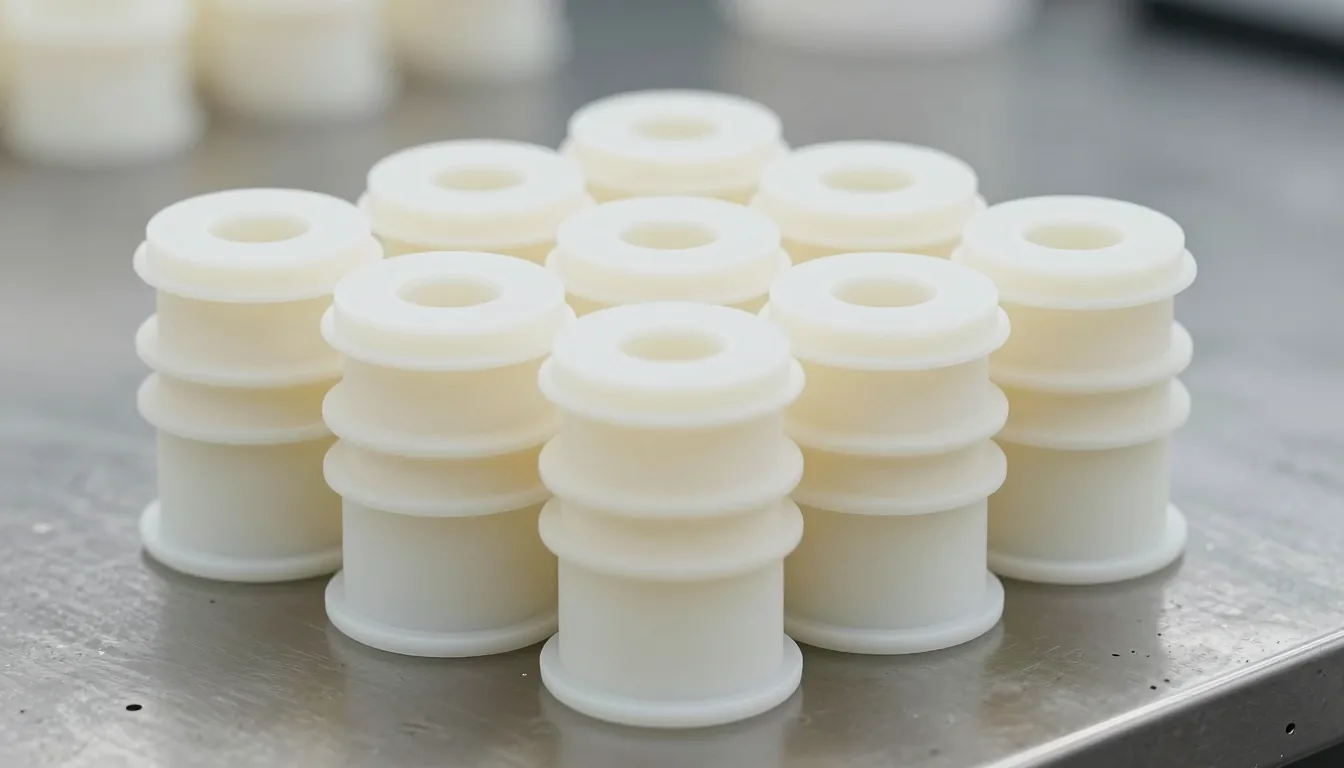
Invisible Costs of Shortening Time
Early wear and warranty problems
Short cuts are common in high-volume lines under delivery pressure. The savings appear at 0.25 kWh per part, but hidden costs dwarf that figure. Field returns for under-cured seals average 12-18x the part cost to process, including freight, inspection, and customer downtime. A batch of 5,000 under-cured gaskets saved about $40 in energy and cost $18,000 in returns and lost reorders. The calculation is never marginal.
Defines as unattributable application errors
Worst case: the defect surfaces in the customer's product, not yours. They diagnose their design, change materials, adjust tolerances, and still fail. The true cause (post-cure under-exposure) is invisible unless they request a lab FTIR or DSC. You may lose the contract without knowing why. When the cause is finally identified, it is framed as process control failure, eroding trust permanently.
Temperature and Duration Balance Matrix
Post-cure parameters scale with temperature. Lower oven temperature requires longer time; higher temperatures risk scorch or surface blistering. The 4-hour standard assumes 200°C. Adjust the matrix when using tunnel or shelf ovens.
| Oven Type | Typical Setpoint | Recommended Duration | Part Thickness Limit |
|---|---|---|---|
| Tray / Batch | 200°C (392°F) | 4 hours | ≤ 25 mm |
| Tunnel (continuous) | 185-190°C (365-374°F) | 5 hours (slower feed) | ≤ 18 mm |
| Forced air (high CFM) | 195°C (383°F) | 3.5-4 hours | ≤ 30 mm |
| Convection (natural) | 205°C (401°F) | 4.5 hours | ≤ 20 mm |
| Forced convection + steam purge | 180°C (356°F) | 6 hours | ≤ 35 mm |
Parameter settings by oven type
Tray ovens with good airflow at 200°C deliver the standard 4 hours. Add 30 minutes if loading exceeds 60% of volume because the thermal mass slows heat recovery. Tunnel ovens need slower conveyance or longer length; measure the actual dwell time in the hot zone, not the set length. Forced air ovens with >1.5 m/s velocity at the part surface can reduce time to 3.5 hours; verify with hardness. Never exceed 210°C for more than one hour; platinum catalysts begin to migrate and darken the rubber.
Accounting for the thickness factor
Thicker parts lag in reaching equilibrium. Rule of thumb: add 30 minutes per 10 mm over 10 mm thickness at 200°C. A 25 mm block needs 4.75 hours. For sections over 50 mm, consider a two-stage ramp (first hour at 160°C, then 200°C) to prevent internal cracking. Use thermocouples glued to sacrificial parts to validate core temperature before scaling production. The time table above assumes uniform loading; stagger racks to allow air circulation. Explore silicone compounds for your application, review mold design and CNC for proper thermal channels, compare flat surface and texture surface options, or browse the full plastisol category for grades rated to 25-80 Shore A with documented post-cure data.
Looking for Professional Silicone Masking Solutions?
As YÜZEYTEK, we provide professional silicone masking and industrial coating solutions worldwide. Contact us immediately for your needs.
Related Posts
Plugs for E-Coat: Why Silicone and How They Stay
SPP vs SPM Plugs: Stepped Geometry and Selection Criteria