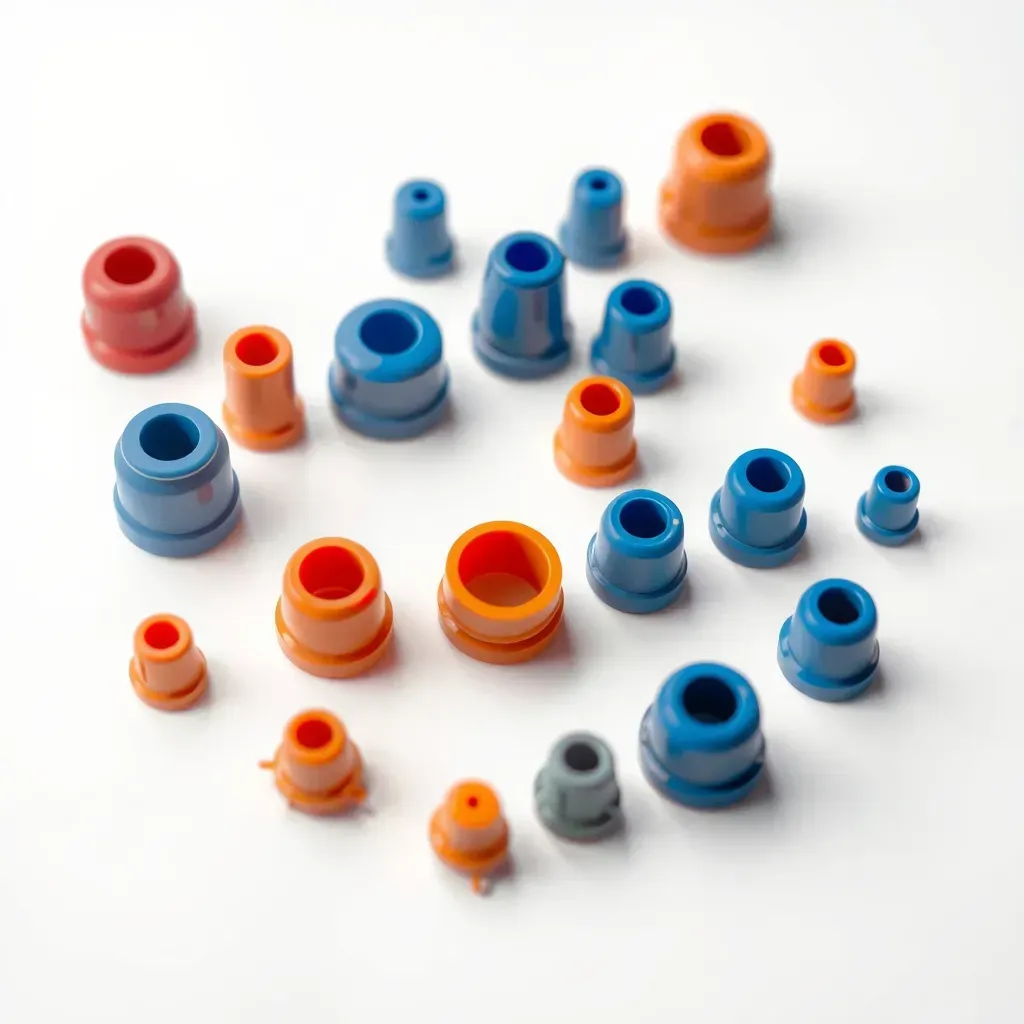
Silicone Plug Cleaning: 5 Methods to Extend Lifespan
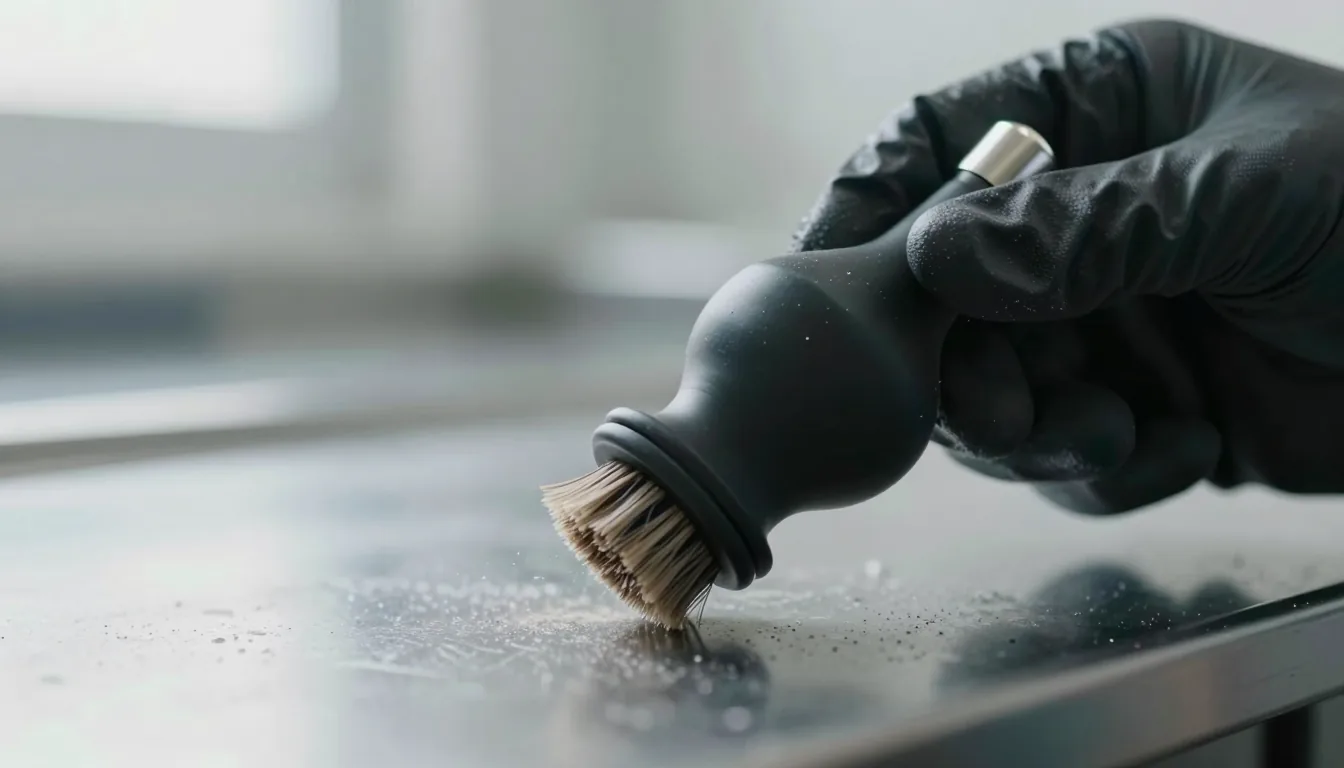
Impact of Silicone Plug Cleaning on Operational Efficiency
Clean silicone plugs extend the lifespan of your masking components and protect sensitive surfaces from defects. By removing cured paint, adhesive residue, and dust, you maintain a reliable seal during every production cycle.
A consistent cleaning routine is essential for operations that use masking plugs daily. Accumulated debris creates gaps in the mask, allowing overspray to reach finished parts. This leads to expensive rework or outright scrap, directly affecting your bottom line.
Cost Analysis of Reuse Rate
Replacing plugs after every single use is rarely necessary and often wasteful. Silicone compounds typically withstand temperatures ranging from -90 to +315 °C. If properly cleaned, they retain their elastomeric properties for multiple cycles.
The economic value comes from maximizing the reuse rate of expensive tooling. You reduce the volume of waste and lower procurement costs over a fiscal year. This simple shift in maintenance habits can significantly improve the unit cost of each masked part.
Preventing Masking Failures
Masking failures rarely happen without warning. They are usually the result of tiny, hardened flakes of paint that dislodge during application. These flakes get trapped under the plug seal, creating a leak path for paint or plating chemicals.
- Surface contamination prevents a full seal against the part.
- Air pressure during spraying can push debris under the plug.
- Residue from previous chemical processes can degrade the silicone.
Regular inspection eliminates these risks before they impact the assembly line.
First Step: Removing Heavy Debris and Excess Residue
Before applying chemicals or mechanical scrubbing, you must remove gross contamination. Solid pieces of cured paint or masking tape must be physically removed to prevent scratching the plug during later steps.
Surface Scanning with Compressed Air
Compressed air is the fastest way to clear loose particulate matter from the plug surface. Hold the nozzle perpendicular to the plug body, not directly against it, to avoid driving dust deeper into porous areas.
Pressure Control to Preserve Elastomer Structure
High-pressure air can be too aggressive for soft materials. While silicone is resilient, excessive force can stress the material or blow it out of shape if the air is hot.
| Air Pressure (Bar) | Recommended Distance (cm) | Risk Level | Best For |
|---|---|---|---|
| 2-4 | 10-15 | Low | Initial dust removal |
| 4-6 | 15-20 | Moderate | Dry paint flakes |
| 6+ | 20+ | High | Use with caution |
Use lower pressures and closer proximity for delicate areas like thin flanges. The goal is to knock debris off without impacting the material integrity.
Correct Brush Selection in Mechanical Cleaning
When air is insufficient, mechanical scrubbing is the next line of defense. Choosing the wrong brush can do more harm than good, potentially tearing the surface or embedding particles.
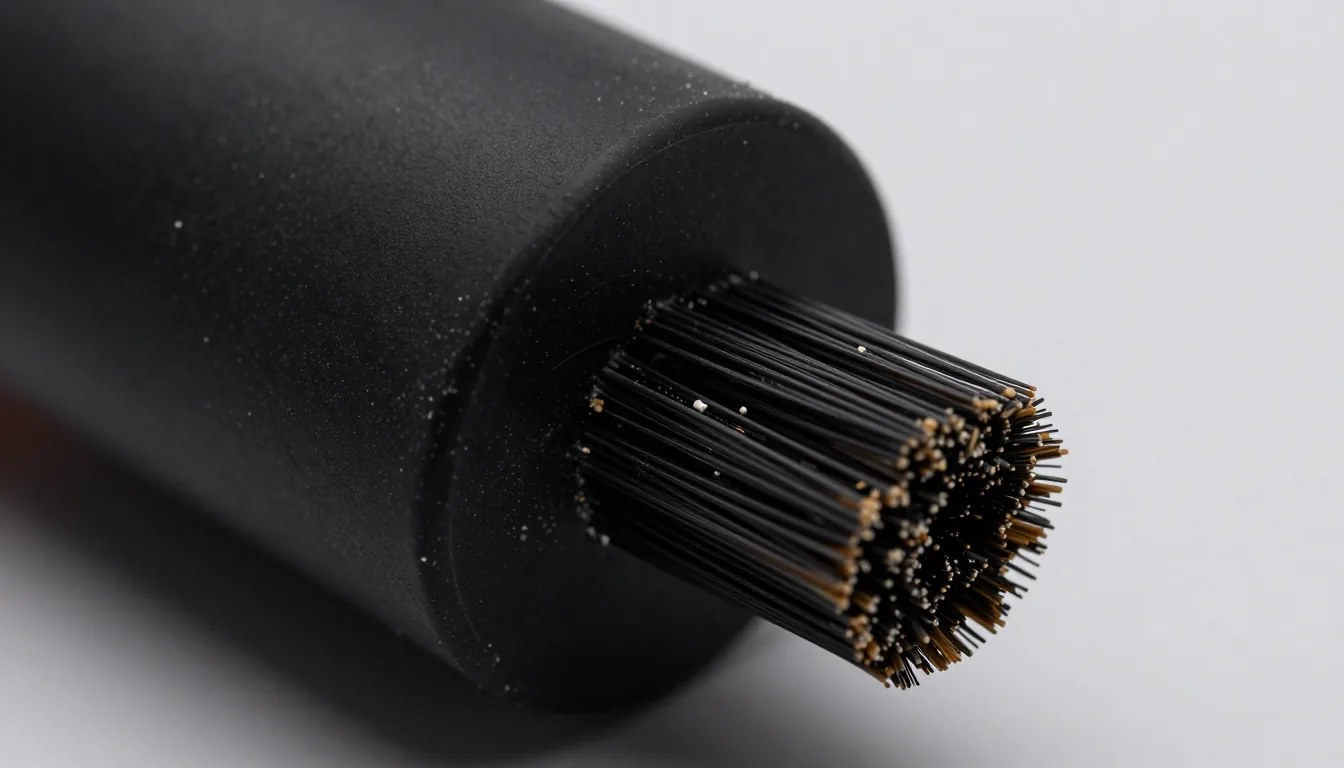
Synthetic vs Natural Bristle Balance
Synthetic bristles are generally preferred because they resist chemical absorption and do not shed. Natural bristles can hold onto solvents, which may then transfer unwanted chemicals back onto the plug or the next part. Use stiff nylon for hard residues and soft brushes for polishing.
Detecting Broken Silicone Fragments
Scrubbing action exposes micro-fractures in aged plugs. If the brush pulls off small black crumbs of material, the plug is losing its structural integrity.
- Inspect the plug head after every mechanical cleaning cycle.
- Discard plugs with visible cracks or pitting on the surface.
- Keep separate brushes for different plug sizes to prevent cross-contamination.
Compatibility of Chemical Solvents with Silicone
Silicone is chemically stable, but it is not inert to all industrial solvents. Understanding the interaction between the mask and the cleaner is vital for preserving the product's lifespan.
Swelling Risk and Solvent Interactions
Hydrocarbons, such as toluene or xylene, can cause silicone to swell. This changes the dimensional tolerances, meaning the plug may no longer fit tightly in the bore or thread it is masking. Once the solvent evaporates, the plug shrinks, often leaving permanent stress marks.
Always test a non-critical area of the plug first. If the silicone becomes tacky or soft, discontinue use of that solvent immediately. Incompatible chemicals can also cause "extractables" to leach onto your product, causing contamination defects.
Caution with Delicate SMT Conical Plugs
Small diameter plugs, such as those used for Surface Mount Technology (SMT) applications, have a high surface area to volume ratio. Chemicals act much faster on these small parts.
For SMT conical plugs, limit immersion time to the absolute minimum. Use a swab for cleaning rather than total immersion if possible. The geometry of flanged conical plugs often allows for swabbing, as the flange protects the cone while you work on the tip.
Ultrasonic Cleaning: A Solution for Detailed Masking
Ultrasonic cleaning offers a thorough method for complex geometries. However, it requires precise setup to avoid damaging the soft elastomer.
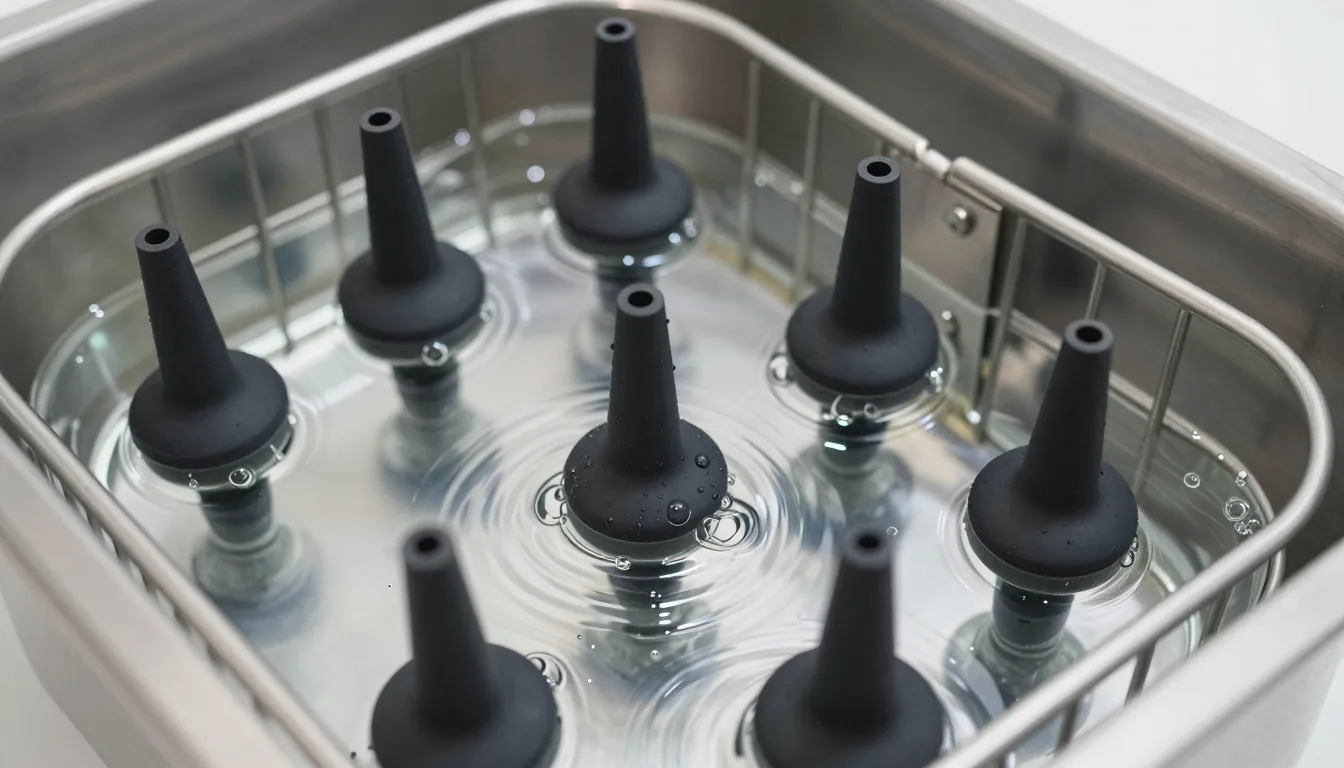
Frequency Setting and Vibration Intensity
High frequencies produce smaller cavitation bubbles that are gentler on surfaces. Standard industrial ultrasonic cleaners often run at lower frequencies, which can be too aggressive. Use a lower frequency for heavy paint removal but keep the duration short.
Risk of Damage to Thin-Walled Tiered Plugs
Tiered plugs have thin steps that can vibrate and fatigue. If the energy is too high, it can create micro-cracks at the transition points.
- Secure plugs firmly in a basket to prevent them from clattering against each other.
- Use a mild cleaning agent specifically designed for elastomers.
- Monitor the bath temperature, as heat plus vibration can degrade silicone.
Method Selection Based on High-Temperature Resistance
Choosing the right cleaning method depends partly on the thermal history of the plug. A plug that has been baked repeatedly will behave differently than a new one.
Thermal Resistance in the -90/+315 °C Range
Silicone plugs in this range are engineered to hold their seal during the bake cycle. However, repeated thermal cycling hardens the material over time. This is known as thermal aging.
Thermal Shock and Micro-Crack Formation
Introduce cleaning agents to the plug gradually if the part has been stored in an extreme environment. Plunging a hot plug into a cold solvent, or vice versa, causes thermal shock. This stress manifests as micro-cracks, which eventually lead to catastrophic failure during the next masking application.
Let the part acclimate to the cleaning room temperature before introducing it to any process. This is especially important for twin conical plugs used in aerospace applications where precision is paramount.
Rinsing Protocols After Chemical Cleaning
Cleaning is only half the job. If you do not remove the cleaning agents, they become contaminants on the next part.
Solvent Residue and Contamination
Solvent residue can react with fresh paint or adhesives. It can cause "fish eyes" in paint finishes or prevent adhesives from bonding. Always ensure the plug is chemically neutral before it touches a production part.
Importance of Deionized Water
Do not use tap water for the final rinse. Tap water contains minerals and chlorine that can leave spots or degrade the silicone surface. Silicone putty and plugs require a pristine environment.
- Rinse with deionized water to remove any ionic contaminants.
- Blow dry immediately with filtered air to prevent water spots.
- Check the pH level of the rinse water to ensure it is neutral.
Visual Inspection and Engineering Control Stages
A rigorous quality control step is required after every cleaning cycle. You cannot rely on the cleaner alone to ensure the part is good.
Edge Damage in Flanged Conical Plugs
The rim of the flange is the primary sealing surface. Inspect this under magnification. Any chips or rolls on the edge will cause leaks.
Symmetry Test for Twin Conical Structures
Twin conical plugs rely on perfect symmetry. A deformation on one side prevents a balanced seal on the other.
- Use a profile projector or simple calipers to check for roundness.
- Verify that the plug slides easily into the gauge block.
- Reject any plug that feels stiff or sticks during testing.
Optimal Storage Conditions and Life Extension
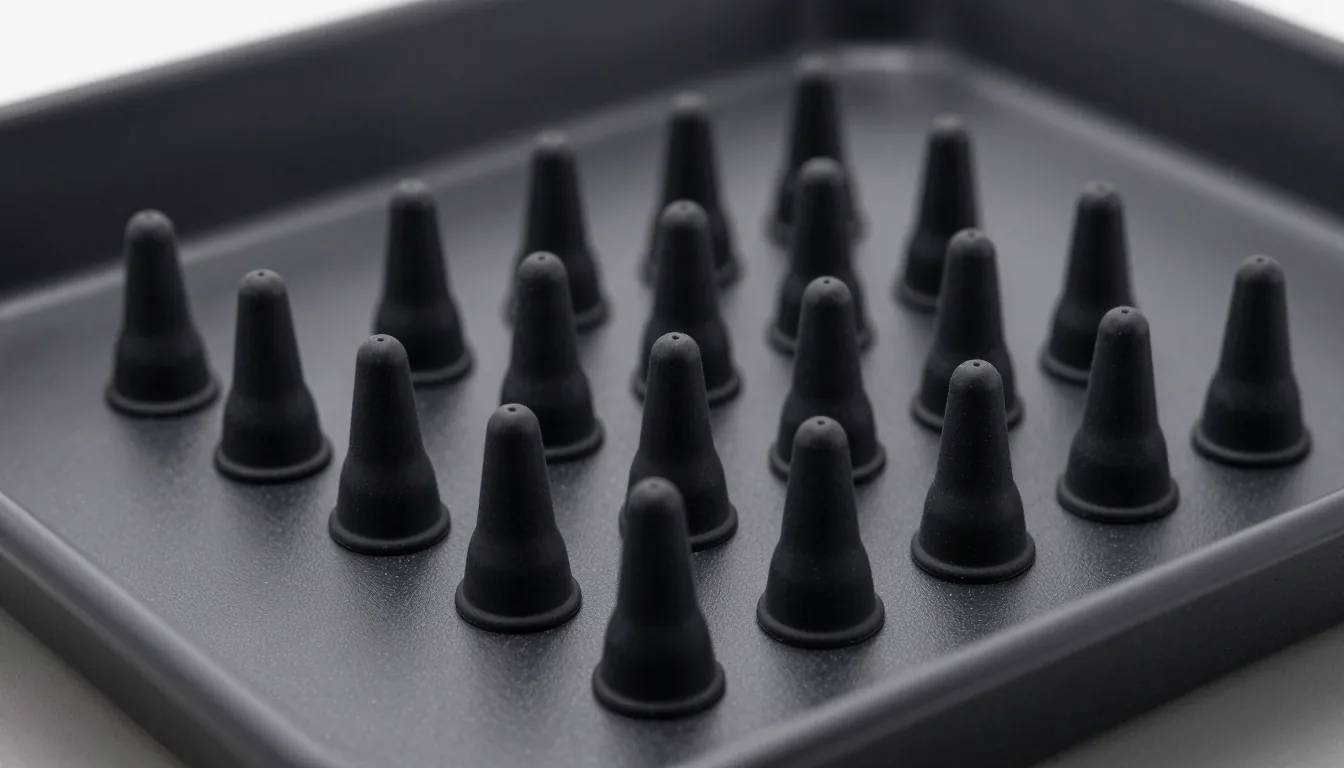
How you store your clean plugs determines how long they last. Poor storage undoes the effort you put into cleaning.
UV Radiation and Oxidation Control
Ultraviolet light degrades silicone, making it brittle and chalky. Never store plugs near windows or in unshielded outdoor areas.
Preventing Deformation with Correct Positioning
Silicone creeps under its own weight if left on its side. Always store plugs upright if the geometry allows, or in individual compartments. Do not stack them in loose piles where they can distort.
Keep them in a cool, dry place away from direct sunlight and heat sources.
Efficient Cleaning Strategies for Industrial B2B Manufacturers
For large manufacturers, cleaning must be integrated into the workflow. It cannot be an afterthought.
Maintenance of Integrated Masking Systems
A clean plug does not help if the assembly fixture is dirty. Maintain the entire system, including holders and fixtures, with the same rigor as the plugs.
Back-up Masking Areas with Silicone Putty
When cleaning takes time, production must continue. Keep backup masks ready to swap out. Silicone putty can be used for complex areas, but it has different cleaning requirements than plugs. Ensure your team knows the specific maintenance protocols for each masking material.
Looking for Professional Silicone Masking Solutions?
As YÜZEYTEK, we provide professional silicone masking and industrial coating solutions worldwide. Contact us immediately for your needs.
Related Posts
Masking in E-coat and Cataphoresis Processes: Comprehensive Application Guide

Proper Storage and Maintenance of Industrial Masking Materials