What Is a Silicone Masking Plug? How It Works in Powder Coating and E-Coat

A silicone masking plug is a flexible stopper pushed into threaded holes, pin bores and other protected areas before coating. Its job is simple to state: keep the coating out, keep the thread intact. On powder coating and e-coat lines, the plug you choose decides both assembly quality and how often the line stops for rework.
This guide follows the plug through the process. It explains where the plug sits, why it survives the curing oven, which geometry fits which hole, and which mistakes cause most masking failures. At the end you will find a sizing sequence you can apply to your own part.
What a silicone masking plug does
The plug is a moulded elastomer part made for repeated contact with heat and coating chemicals. When the part is sprayed or dipped, the plug closes the hole opening mechanically. Paint, powder and pretreatment liquids cannot travel into the bore.
It is not the same as a plastic cap. Powder coating ovens usually run between 180 °C and 220 °C. E-coat curing runs between 180 °C and 200 °C. Many plastics soften in that range, take a permanent set and slide out of the hole. Our silicone plugs are rated from -90 °C to +315 °C. The oven stays well inside that window, so the plug keeps its elasticity, stays seated and releases without marking the coating.
What the plug does on a powder coating line
Powder is charged electrostatically and sprayed at a grounded part. The charged particles cling to the outer surface. Inside holes and recessed areas the field weakens. This is the Faraday cage effect. Some powder still reaches the hole mouth and the first threads. After curing, that powder becomes a hard film and the bolt no longer runs freely.
The silicone plug blocks that path in two ways:
- It closes the hole mouth so powder cannot enter.
- It keeps its flexibility at oven temperature, so it does not creep out of the bore.
With the right plug, threads come out of the oven clean. Assembly runs at normal speed, with no chasing, tapping or thread repair. The saving is easy to miss because it appears at a later station, but it is real.

What the plug does on an e-coat line
E-coat, also called cataphoresis, immerses the whole part in a paint bath. The coating is deposited by electrical current. Because the part is fully submerged, paint reaches every open hole. Coating inside threads and blind bores causes assembly defects and uneven film build.
Two plug properties matter here. First, sealing: the plug must form a barrier the bath cannot pass. Second, chemical resistance: the bath chemistry, pH and solvents must not swell or soften the plug. Silicone balances both. When the plug is removed, the threads are clean and the coating edge is sharp.
The part is cured after the bath. The plug stays in place while the film hardens. Removing it too early can crack the coating edge and leave a halo around the hole. Pull plugs after the oven, once the part has cooled enough to handle.
Why silicone
Material selection starts with oven temperature and bath chemistry. Silicone earns its place for five reasons:
- Temperature range: -90 °C to +315 °C in our data sheets. Powder and e-coat ovens sit inside that range.
- Elasticity: Shore A 45 to 60 gives a plug that seats by hand and still grips the bore.
- Compression set resistance: the plug returns to shape after the oven and works again on the next part.
- Chemical resistance: paint, degreasers and bath liquids do not swell the plug.
- Surface safety: a correctly sized silicone plug leaves no ring or stain on the coated face.
Our silicone compounds and plugs go through a four hour post-cure. This step drives off volatiles and stabilises hardness, so plugs from the same batch behave the same way on the line.
When PVC or another material fits better
Not every line runs above 200 °C. For liquid paint drying, low temperature coatings and room temperature operations, PVC vinyl caps are a practical choice. Our PVC range is rated from -60 °C to +177 °C, which covers many liquid paint ovens and wash lines. PVC costs less and is stiffer, so it gives less stretch during fitting. If the oven goes above 177 °C, use silicone. Polyester masking tape runs from 0 °C to 200 °C and Kapton tape from 0 °C to 260 °C. Tape and plugs often work together on the same rack; the choice follows the geometry of the surface being protected.
Rack design matters
A correct plug can still fail if the part hangs badly. On a downward facing hole, gravity pulls the plug out. On an upward facing hole, powder collects at the mouth. Racks that hold holes horizontal or slightly tilted make the plug's job easier. Oven temperature is not uniform either. Areas near the door can run hotter, so plugs in those positions deserve a margin below their upper limit.
Plug types and where they fit
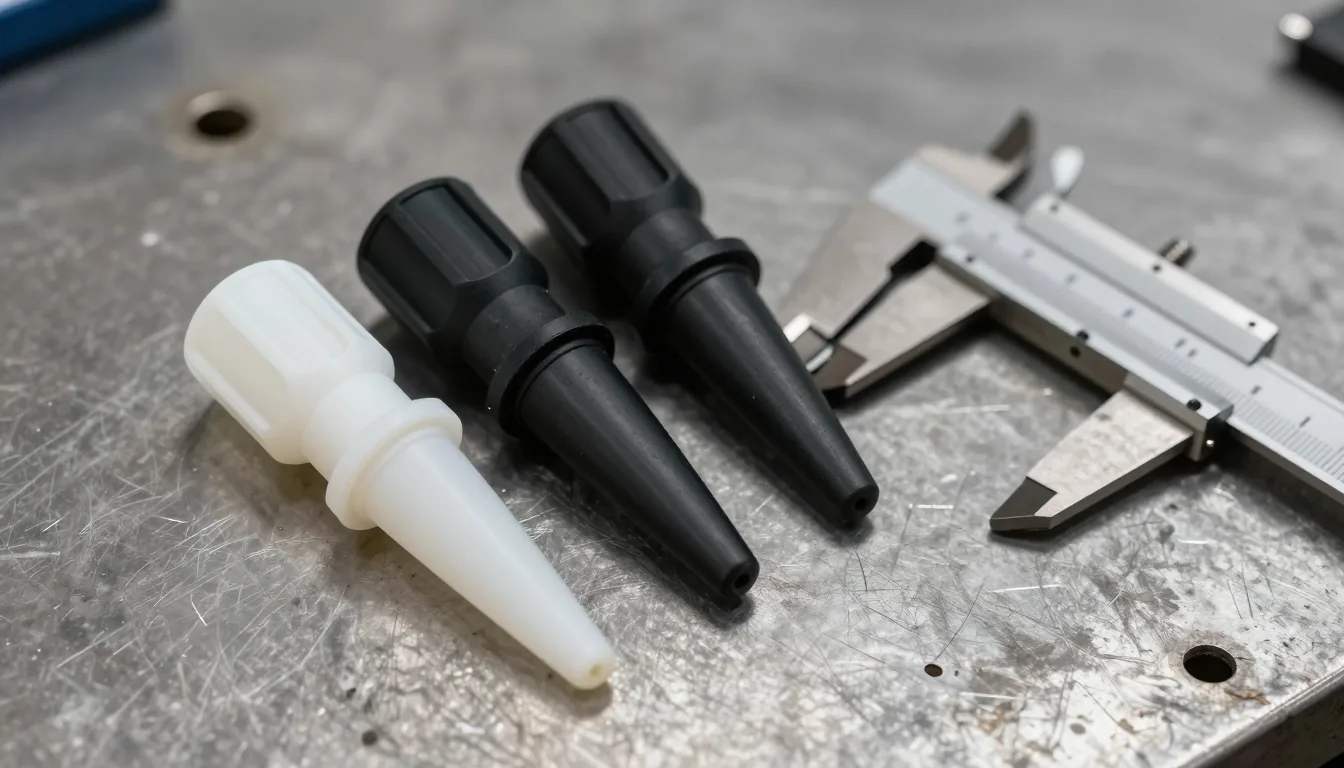
Holes differ. A threaded hole, a blind bore, a sheet metal opening and an open face each need a different geometry. Our main families:
| Plug type | Geometry | Typical use |
|---|---|---|
| SMT conical plugs | Tapered body, flat seating face | Round holes in several diameters, fast fitting |
| DFP threaded plugs | Body matched to the thread profile | Metric threaded holes, protecting assembly threads |
| SPP stepped plugs | Two or more diameter steps | Holes that change diameter along their depth |
| SCT flanged conical plugs | Tapered body with a flange | Protecting the surface around the hole as well |
| UW double conical plugs | Tapered from both ends | Holes reached from either side, no orientation needed |
| STM push-in plugs | Cylindrical body with a retaining groove | Straight bores that need a firm interference fit |
Geometry is only half the decision. How the part hangs, where the gun points and how heat is distributed in the oven all change the result. A downward hole may need a flanged or retaining design even when a plain conical plug fits the diameter.
Browse SMT conical plugs for tapered holes, DFP threaded plugs for threaded holes, and SCT flanged plugs when the surface around the hole also needs protection.
How to choose the size
Sizing decides whether the plug works. Work in this order:
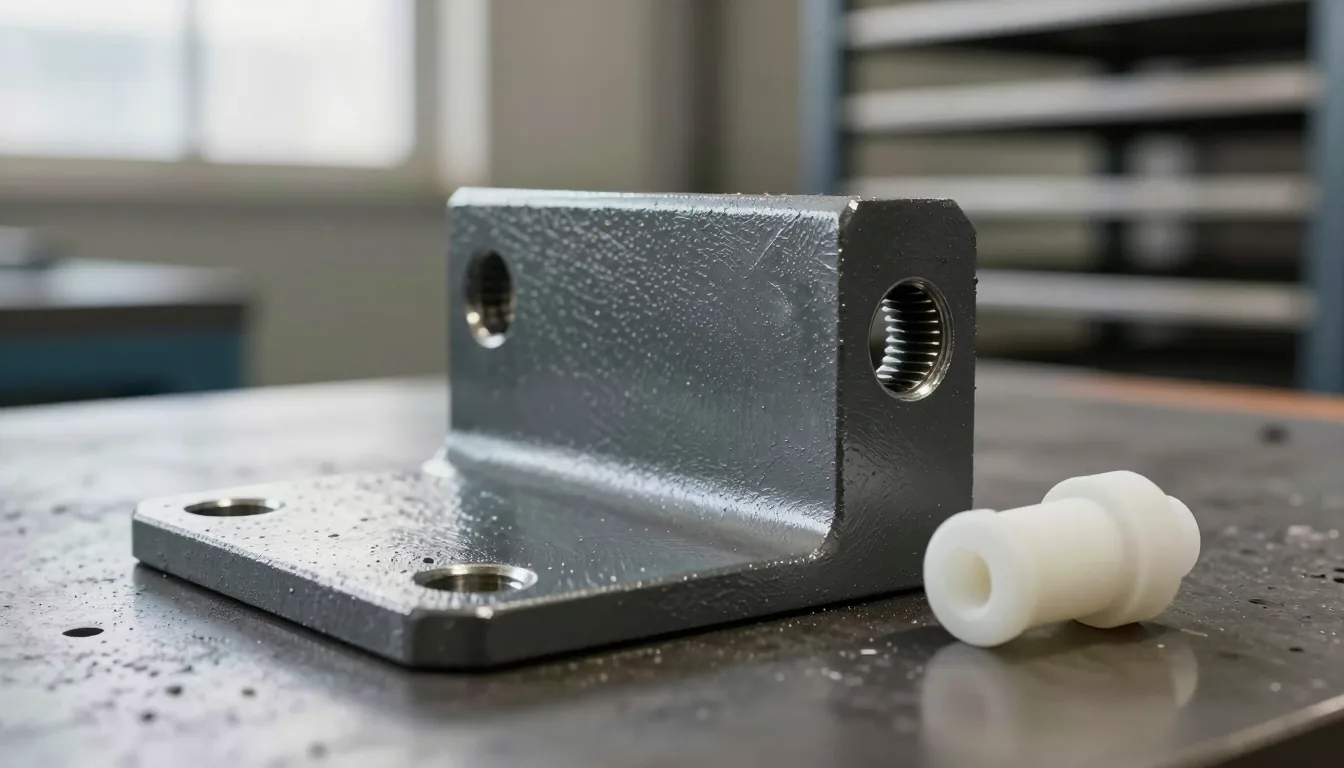
- Measure the hole. Use calipers and take readings in two directions. For oval holes, record the largest and smallest diameter.
- Check the thread. On threaded holes, confirm pitch with thread gauges. A threaded plug with the wrong pitch will fight the thread on the first turn.
- Measure depth. The body should sit inside the hole without protruding, but deep enough to seal. Leave clearance at the bottom of blind holes.
- Look at the surface. If the area around the hole must stay uncoated, choose a flanged model.
- Confirm oven temperature. The working temperature must stay inside the plug's rated range.
Sizing tables and tolerances are covered in the next article. One rule belongs here: the plug closest to the hole diameter is not automatically correct. The body is selected against the major diameter of the thread, not the minor diameter. Pick against the wrong one and the plug sits high, then moves in the oven.
Application sequence
- Clean the hole. Remove chips, oil and pretreatment residue. A dirty bore prevents full seating.
- Inspect the plug. Discard any plug with a tear, crack or permanent set. Reusable plugs are checked every cycle.
- Seat the plug. Press it straight into the hole. Conical plugs need little force. Threaded plugs go in by hand, locating the first thread and turning clockwise.
- Check seating. The flange should touch the surface and the plug should sit square. A tilted plug is the first cause of oven movement.
- Coat and cure. Paint may build up on the plug body. The hole mouth stays sealed. Plugs should still be in place at the oven exit.
- Remove. Wait until the part is cool enough to handle with gloves. Pulling a hot plug tears the silicone and can damage the coating edge.
Common mistakes
- Choosing a plug that is too small. It sits loose, powder reaches the threads, and the cost appears later as thread repair.
- Skipping the flange. Coating thickness differs around the hole and shows as a visible ring on cosmetic surfaces.
- Fitting into an oily hole. The plug slides and drops in the oven. Clean before masking, not after.
- Reusing a plug indefinitely. Silicone is elastic, but tears and hardness drift appear over time. Track batches and inspect on a schedule.
- Ignoring the oven profile. If the line runs above the rated temperature, the plug takes a permanent set.
Quality control and batch traceability
A masking plug is measured on three things: dimensional stability, hardness and surface integrity. We sample every batch. Dimensions are checked with calipers and a profile projector, hardness with a Shore A durometer, and the surface is inspected for flash, tears and mould marks.
On the customer side, a first article approval is worth the time. Fit the plug, run it through the real oven, inspect the bore after coating and test the thread with a gauge. This catches most surprises before series production starts.
How YÜZEYTEK works
YÜZEYTEK has been producing surface treatment products in Tuzla, Istanbul since 2014. Silicone masking plugs, silicone compounds, PVC vinyl caps, tapes and plastisol raw materials are made under the same production discipline. Dimensions and temperature data are verified for every batch.
To choose the right plug, we need the hole size, thread information and oven temperature. Send a photo and the measurements of your part and we will match the plug with you. You can browse the silicone plug caps category, or go straight to DFP threaded plugs for threaded holes.
Frequently asked questions
How many times can a silicone plug be reused?
Service life depends on oven temperature, coating chemistry and how the plug is removed. Inspect it every cycle and discard any plug with a tear, crack or permanent deformation. We recommend batch based inspection rather than a fixed number of cycles.
Can the same plug be used for powder coating and e-coat?
In most cases yes. E-coat puts more weight on chemical resistance and sealing. Share the bath composition and we will confirm the material choice.
Should the plug go in before or after coating?
Before coating. Remove it after curing and cooling. Fitting after coating means the hole is already contaminated and the masking has achieved nothing.
Will the plug leave a mark around the hole?
Not when the hardness and size are correct. A plug that is too hard, or too small and forced into place, can leave a ring on the surface.
Looking for Professional Silicone Masking Solutions?
As YÜZEYTEK, we provide professional silicone masking and industrial coating solutions worldwide. Contact us immediately for your needs.
Related Posts
Silicone Plug Cleaning: 5 Methods to Extend Lifespan
Masking in E-coat and Cataphoresis Processes: Comprehensive Application Guide