Plastisol Viscosity: The Right Setting for Dip and Spray
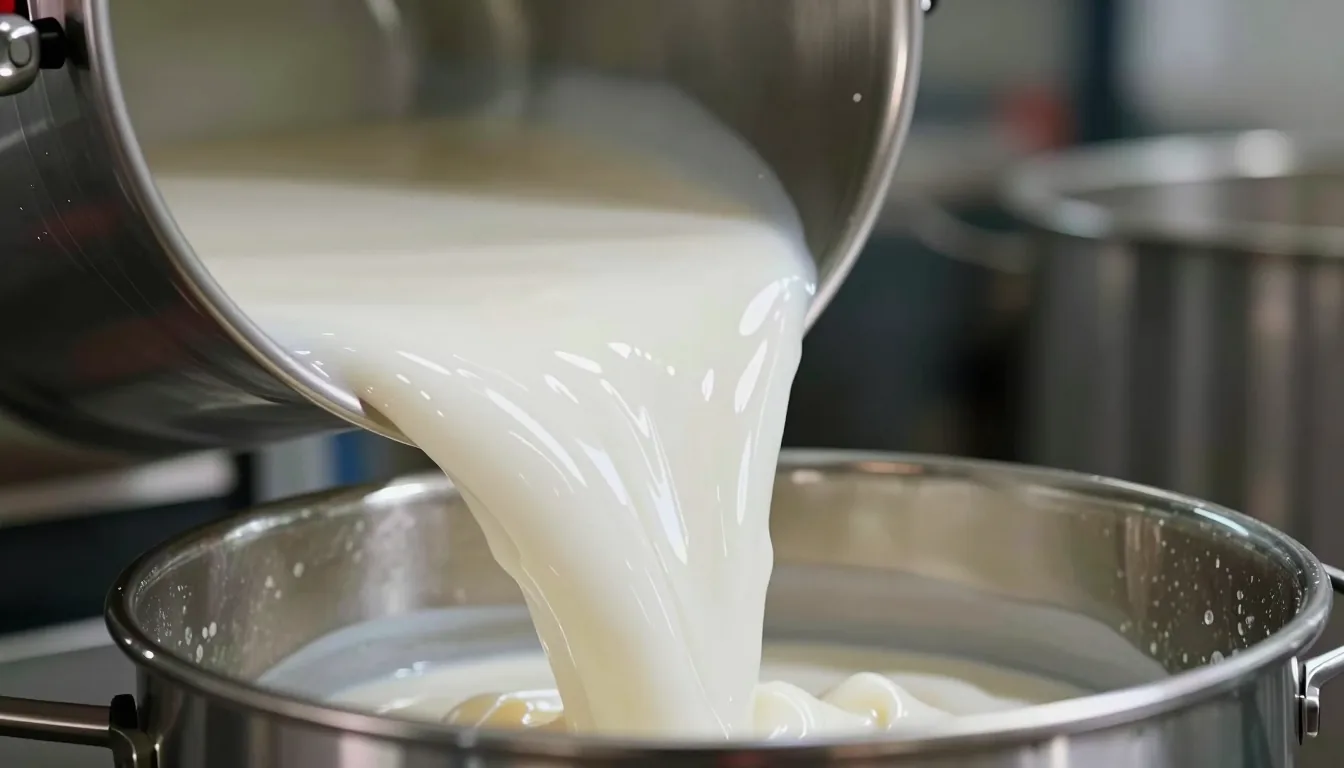
Plastisol viscosity determines coating thickness, surface finish, and defect rates directly. Selecting a high viscosity paste for dip molding and a low viscosity paste for spray application aligns material behavior with the physical forces of the process.
Core Mechanism of Plastisol Viscosity
Plastisol behaves differently from standard water based paints. The material contains polyvinyl chloride resin suspended in liquid plasticizer. At room temperature the particles remain separated. The plasticizer acts as a lubricant that reduces internal friction. Viscosity controls how much energy is required to move the paste through a nozzle or across a mold surface. If the resistance is too high for a pump, the motor stalls. If the resistance is too low for a dipping tank, the coating drips and thins out. The goal is to match the material's resistance to the mechanical forces applied during the specific production phase. Operators often adjust viscosity using external heat or by selecting pre graded compounds. A slight change in temperature can alter the flow speed by twenty percent. You cannot treat plastisol as a static liquid; it responds instantly to shear and heat.
Understanding Non-Newtonian Flow Behavior Profiles
Most fluids follow Newton's law where viscosity remains constant regardless of speed. Plastisol is non Newtonian. It exhibits shear thinning characteristics. This means the viscosity drops when you force the material through a narrow nozzle. Once the pressure is released the material recovers its original thickness. This property is essential for spray applications. The paste must be thick enough to stay in the tank without separating, but thin enough to atomize through the nozzle. Understanding shear thinning prevents operators from assuming the material will flow the same way in the tank as it does in the pipe.
Shear Rate and Rheological Relationships
Shear rate is the speed at which layers of the fluid slide past each other. In spray systems, the shear rate is extremely high near the nozzle tip. In a dip tank, the shear rate is minimal. If you measure viscosity with a standard cup at low shear, you get one number. If you measure it at the high shear of a spray gun, you get a different number. Manufacturers provide viscosity data at specific shear rates. Always check the test conditions listed in the technical data sheet before adjusting your line parameters.
Managing Flow Resistance in Dip Coating
Dip molding relies on gravity and drainage to create the final coating thickness. The plastisol must cling to the mold surface initially, then drain smoothly without leaving thick drips or uneven ridges. If the viscosity is too low, the coating will be too thin and may expose the metal substrate at the edges. If the viscosity is too high, the material will not flow off the mold properly, creating heavy buildup at corners and joints. The balance requires a paste that holds shape under static conditions but yields slowly under the constant force of gravity. Most dip processes target a viscosity range that allows the material to hang on the mold for a few seconds before beginning a controlled descent. This "hang time" is critical for achieving uniform coverage on complex geometries.
Drip Rate Dynamics Under Gravity
When you remove a mold from the tank, gravity pulls the excess material back into the vat. The speed of this drainage is determined by the viscosity and the temperature of the paste. Faster drainage reduces the total thickness of the cured part. Slower drainage increases the weight and thickness. Operators monitor the drainage rate by timing the removal process or by weighing the mold before and after draining. Consistent drainage ensures dimensional accuracy. If the material is too cold, it thickens and drains too slowly. If it is too hot, it becomes watery and drains too fast.
Viscosity Windows for Uniform Film Thickness
There is a narrow window where viscosity produces a smooth, even coating. Outside this window, defects appear immediately. Too low causes thin spots and runs. Too high causes orange peel texture and trapped air. Finding this sweet spot requires trial runs with sample molds. You must account for the ambient temperature of the shop floor as well. A drafty room can cool the surface of the mold before the plastisol drains, altering the flow pattern. Maintaining a stable environment helps keep the viscosity within the working range throughout the shift.
Low Resistance Needs in Spray Applications
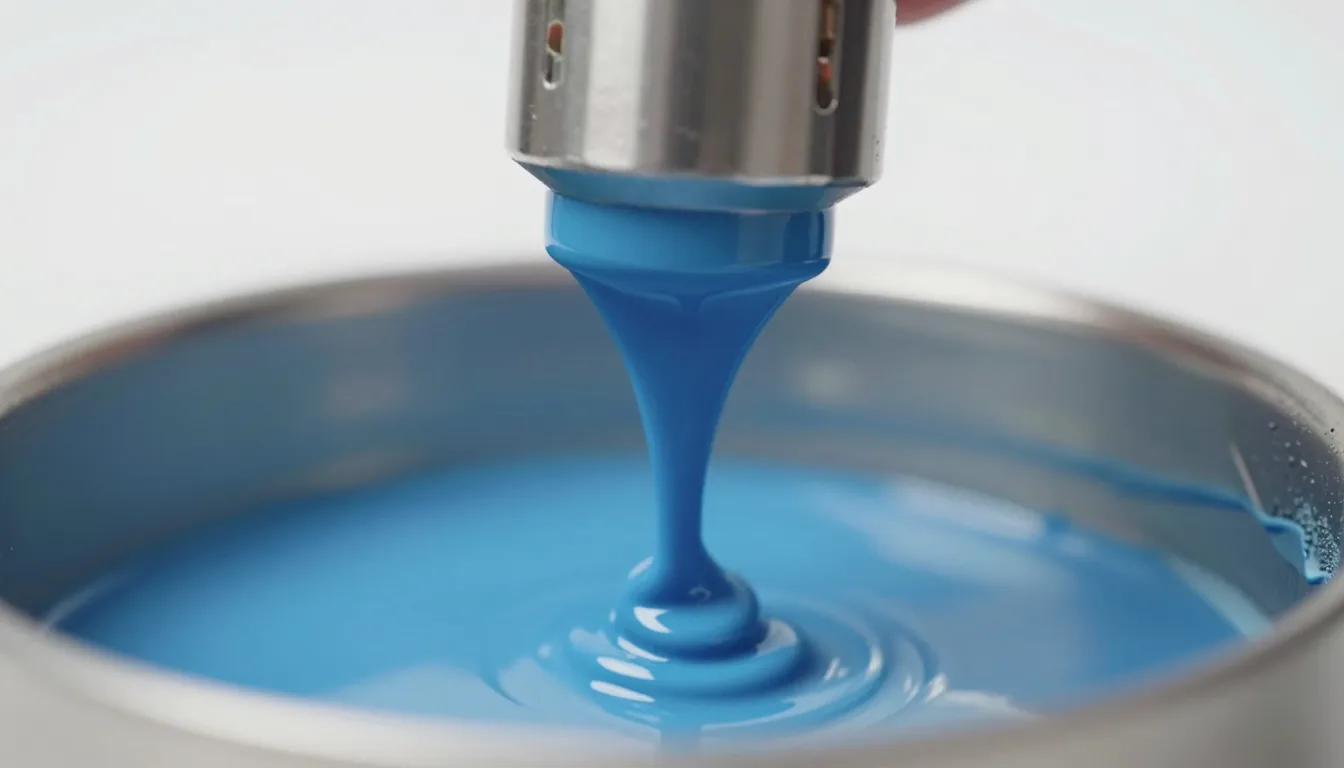
Spray application pushes plastisol through small orifices under pressure. This process demands a significantly lower viscosity than dip molding. The material must flow easily through pumps, hoses, and nozzles without causing pressure drops or clogs. High viscosity in a spray line increases wear on seals and pistons. It also leads to inconsistent atomization, where droplets vary in size, creating a rough or uneven surface. The objective is to lower the viscosity enough to maintain a stable spray pattern while ensuring the material does not drip excessively when the gun is off. Many manufacturers offer spray grade pastes that are pre adjusted for lower resistance. Modifying a dip grade paste for spray use is risky because it may compromise the final cured hardness or durability.
Strategies to Prevent Nozzle Clogging
Clogs in the nozzle are the primary cause of downtime in spray lines. They occur when the material dries or thickens inside the orifice. Keeping the material warm helps maintain flow. Using appropriate solvents in the cleaning cycle prevents residue buildup. Regular flushing of the lines with compatible cleaning agents removes dried particles. Operators should inspect nozzles at the start of each shift. If the spray pattern widens or distorts, the nozzle is likely partially blocked. Replacing the nozzle tip is faster than attempting to unclog it with tools, which can scratch the metal and cause future defects.
Key Parameters Governing Atomization Quality
Atomization is the breaking of the liquid stream into fine droplets. Viscosity is the main variable, but air pressure and nozzle size play roles too. High viscosity requires higher air pressure to break the stream apart. If the pressure is too low, the paint lands in large blobs. If the pressure is too high, the material may mist excessively, wasting product. Finding the correct balance ensures a smooth film. The ideal setup uses the lowest possible pressure that still achieves a fine spray, reducing overspray and material waste.
Critical Role of Temperature Control on Rheology
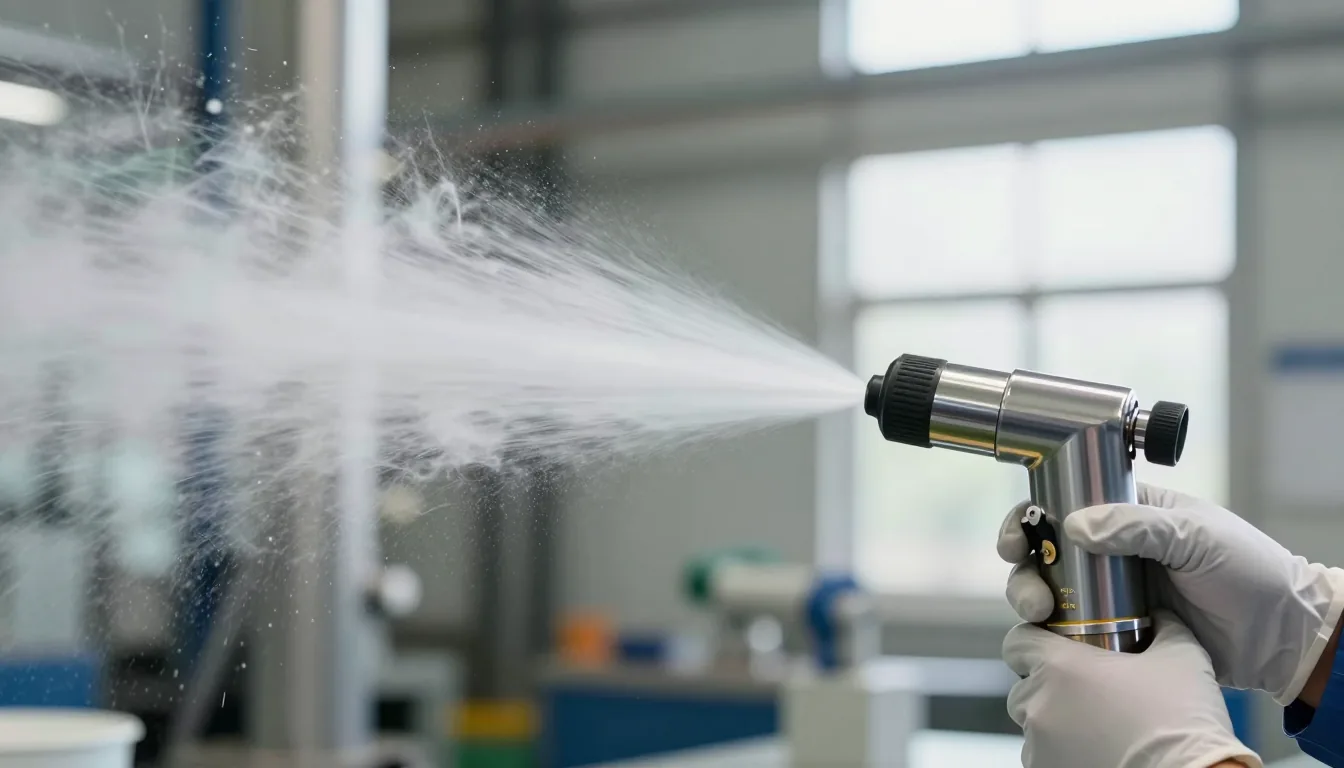
Temperature is the most accessible tool for adjusting viscosity in real time. Heating plastisol reduces internal friction between PVC particles and plasticizer. A temperature increase of five degrees can noticeably thin the material. Conversely, cooling thickens it. This thermal sensitivity allows operators to fine tune flow properties without adding chemicals that might alter the final product. However, temperature control must be precise. If the material gets too hot before application, the plasticizer may begin to separate or the PVC may start to degrade. If it is too cool, the material becomes too stiff to pump. Consistent temperature monitoring is vital for repeatable results in both dip and spray systems.
Thermal Expansion and Flow Enhancement
As plastisol warms, its volume expands slightly and its density decreases. This expansion reduces the interaction between particles, lowering viscosity. In heated transfer lines, this effect is gradual. The material flows better and requires less pump pressure. But if heating is uneven, parts of the line may have different flow rates, causing surges in the output. Proper insulation and heating elements ensure uniform temperature along the entire path from tank to nozzle. Uniform heat prevents the formation of cold spots that can thicken the material locally and disrupt the spray pattern.
Pre-Cure Stability at 170-180 °C
Plastisol is designed to cure at specific temperatures, typically between 170 and 180 degrees Celsius. Below this range, the material remains fluid. If the material approaches the curing temperature prematurely, it may gel in the lines. This gelation is irreversible and will block equipment. Therefore, heating systems for transfer or application should never exceed a safe threshold well below the curing point. A margin of thirty degrees below the gel point provides a safety buffer. Temperature probes placed at key points in the system monitor this limit continuously.
Thermal Management Protocols for Dip Tanks
The dip tank holds a large volume of plastisol. Heat loss occurs through the tank walls and the surface. When molds are inserted, they are often cooler than the liquid, absorbing heat from the bath. This creates localized cooling around the mold. If the tank temperature is not managed, these cold zones can cause the plastisol to thicken and drain unevenly. Heating elements inside the tank must compensate for these losses. The goal is to maintain a constant temperature throughout the entire bath. Poor heating leads to stratification, where the liquid near the heater is thinner than the liquid near the walls. This inconsistency causes coating thickness to vary from part to part.
Analyzing Temperature Gradients Within Tanks
Temperature gradients refer to the difference in temperature between different points in the tank. Ideally, the tank should be isothermal, meaning the same temperature everywhere. In practice, gradients exist. Stirrers and mixers help distribute heat evenly. If mixing is insufficient, the temperature near the surface may drop due to evaporation or drafts. A gradient of more than two degrees can alter viscosity significantly. Use temperature probes at multiple depths and locations to map the thermal profile of the tank. Adjust mixer speed or heater placement to minimize these differences.
Calculating Thermal Equilibrium Processes
Calculating thermal balance ensures the heating system is adequate. You must account for the heat energy lost to the environment, the energy required to heat incoming cold molds, and the energy lost through the surface. If the heaters are undersized, the bath temperature will drop when production rates increase. Undersized heaters cannot recover the lost heat fast enough, leading to poor coating quality. Regularly measure the recovery time of the bath temperature after inserting a batch of molds. This metric helps identify heating capacity issues before they affect product quality.
Heated Transfer Systems in Spray Lines
Transporting plastisol from the main tank to the spray gun requires a dedicated transfer system. These lines are often long and subject to ambient temperature fluctuations. Without heating, the material cools in transit, increasing viscosity. This results in a thicker, slower spray that may not atomize properly. Heated transfer lines use electric trace heating or warm water jackets to maintain the material's temperature. The system must be controlled independently of the tank temperature. The line temperature is often set slightly higher than the tank to compensate for heat loss at the nozzle end. Proper insulation of the lines is just as important as the heating itself, preventing energy waste and maintaining consistency.
Temperature Compensation for Pipe Lines
Temperature compensators adjust the heating power based on real time sensor data. As the material flows through the line, sensors detect the outlet temperature. If the temperature drops, the controller increases the power to the heating element. If it rises, the power decreases. This feedback loop keeps the material at the set point regardless of flow rate changes. Manual adjustments are prone to error and lag. Automated compensation ensures that the material entering the spray gun always has the correct viscosity. This precision reduces material waste and improves finish quality.
Thermal Insulation Details for Nozzle Tips
The nozzle tip is the point of highest failure for thermal consistency. It is exposed to ambient air and cooling air from the spray gun. If the tip cools down, the material thickens and may clog. Specialized nozzles feature thermal isolation sleeves or heated tips. These components keep the last few millimeters of the nozzle warm. Insulating the handle of the spray gun also helps. Operators should avoid touching the nozzle body directly with bare hands, as this can create cold spots. Using gloves or insulating wraps maintains the temperature integrity of the delivery point.
Lab-Level Techniques for Rheological Measurement
Production quality depends on accurate measurement. Field checks are useful but laboratory analysis provides the data needed to troubleshoot. A rotational viscometer is the standard tool. It measures the torque required to rotate a spindle in the sample at a specific speed. This gives a viscosity reading in centipoise or pascal seconds. However, because plastisol is non Newtonian, you must record the shear rate used during the test. Comparing readings from different viscometers is only valid if the test conditions are identical. Calibration with standard fluids ensures the instrument reads correctly. Regular calibration is part of quality control protocols.
Protocols for Rotational Viscometer Usage
When using a rotational viscometer, the spindle must be fully submerged. The sample container should be wide enough to prevent wall effects from interfering with the measurement. The material must be free of air bubbles, which skew results. After inserting the spindle, wait for the reading to stabilize. This may take several seconds to a minute. Record the temperature of the sample along with the viscosity value. Always clean the spindle immediately after testing to prevent dried plastisol from hardening on the instrument. Use the appropriate spindle size for the expected viscosity range to stay within the machine's optimal detection limits.
Constant Shear Stress Test Methodology
For deeper analysis, a stress controlled rheometer applies a constant force and measures the resulting flow rate. This method mimics the pressure drop in a spray nozzle more accurately than a speed controlled viscometer. It reveals how the material behaves under shear stress without waiting for the machine to reach a set speed. The data produces a flow curve that maps viscosity against shear rate. This curve is valuable for engineers designing spray systems, as it predicts how the material will perform under actual operating pressures rather than just at a single test point.
| Application Type | Shear Rate Condition | Viscosity Trend | Primary Control Variable |
|---|---|---|---|
| Dip Molding | Low (Static/Drainage) | High | Temperature & Paste Grade |
| Spray Coating | High (Nozzle Exit) | Low | Temperature & Pressure |
| Curtain Coating | Medium (Weir Overflow) | Medium | Flow Rate & Temperature |
Related products: duz-yuzey-plastisol, texture-yuzey-plastisol, tekli-vana-kollari, kalip-tasarimi-ve-cnc-isleme, plastisol-hammaddeler
- Ölçü ve delik kontrolü
- Takma yönü ve oturma kontrolü
- Sökme ve tekrar kullanım kontrolü
Looking for Professional Silicone Masking Solutions?
As YÜZEYTEK, we provide professional silicone masking and industrial coating solutions worldwide. Contact us immediately for your needs.
Related Posts
Kapton Tape Residue: 4 Causes and Prevention
SMT Tapered Plugs: Sizing, E-coat, and Powder Coating Use